Summary
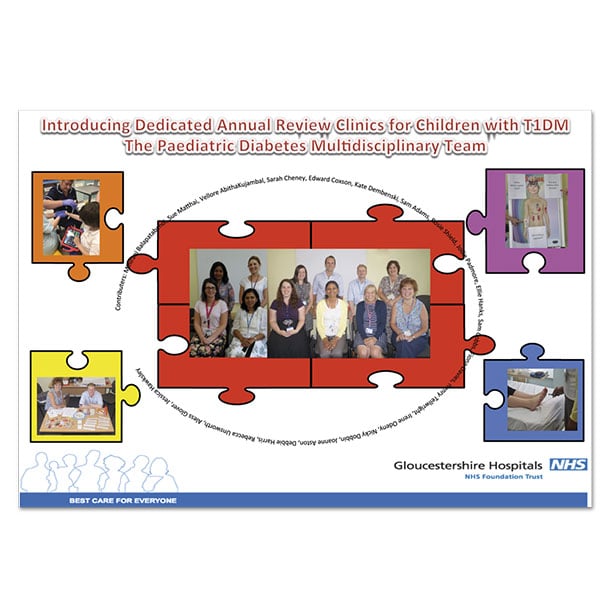
In 2014 the diabetes multidisciplinary team at Gloucestershire Royal Hospital Foundation Trust introduced a dedicated annual review clinic for children with type 1 diabetes over the age of eight years. This takes the form of a three-hour afternoon clinic visit, facilitated by the diabetes multi-disciplinary team, retinal screening and an onsite nurse-led phlebotomy service. Children are offered their consultant appointment, foot check, retinopathy screening and annual review bloods. Furthermore they are encouraged to participate in structured education sessions with other patients and families attending. Sessions are delivered by specialist nurses and diabetes dieticians and have evolved throughout the process by questionnaire evaluation from our patients and families, who are encouraged to share ideas, experiences and questions about their diabetes. Service users and families have indicated they value the service highly.
Results
26 annual review clinics were delivered in 2014-2015 and 20 in 2015-2016. In 2014-2015 147 patients attended annual review with a DNA rate of 11.5% (17 patients). In 2015-2016 176 patients attended annual review in 2015 with a DNA rate of just 6% (11 patients). 91% of respondents positively to the question "Is an annual review clinic useful" with 78% answering 'yes definitely'. The most noticeable area for improvement from the 2014 evaluation was around time management during the clinic and education sessions with a quarter of respondents giving low satisfaction scores of 1-3 out of 5 the question "Do you feel the timing of the session was right". As a result the timing of education sessions were re-configured for 2015 as detailed previously. The majority of 2015 respondents had high satisfaction scores on a strength of agreement and disagreement scale when asked about the relevance of material covered in education sessions, how useful the education sessions were and the ability of annual review to answer their questions. Importantly, 85% of patients and families attending annual review and completing the evaluation form either agreed or strongly agreed that they would use what they had learnt to improve their health.
Challenge
Prior to 2014, annual reviews for children and young people with type I diabetes in Gloucestershire were conducted during routine clinic appointments. These were done on an ad hoc basis at yearly intervals for each individual patient, with no extra time allocated for structured education. Some patients were having annual review bloods taken in the adult hospital phlebotomy service and some in primary care. This variation resulted in difficulty in complying with the seven key care processes in the 2013-2014 National Paediatric Diabetes Audit, with just 22% of patients having their cholesterol measured.
Objectives
To develop a dedicated annual review clinic for children and young people in Gloucestershire with type 1 diabetes.
Solution
The vision was to set up a streamlined and dedicated annual review clinic where patients receive all necessary physical checks, blood test investigations and standardised structured education in a single afternoon clinic visit. Planning began in January 2014 with the first annual review clinic held in April that year. The Lead PDSN liaised with the nursing lead for outpatient services to arrange a paediatric nurse-led phlebotomy service for each clinic. It was also arranged for retinal screening to attend the clinics in order to provide a mop-up clinic to capture patients who had not attended in primary care. Patients were sent a letter inviting them to an age specific pump or injection annual review clinic and explaining the purpose of the new clinic. In the 2014 clinics, education sessions were conducted with families rotating through 15-minute stations covering different topics with different professionals. This was then changed in 2015 following feedback from the 2014 evaluation such that the nurses and dieticians ran a combined 1-hour education session to improve peer support and minimise the time spent waiting. A structured feedback questionnaire was developed for patients attending the 2014 clinics and this was modified following the first annual service evaluation project for the 2015 clinics in order to capture more information from service users.
Learnings
Both quantitative and qualitative data from service users support the success of the initiative. 91% of patients felt the concept of annual review clinics was either definitely or probably useful during its first evaluation and 88% of patients surveyed during both clinic cycles (91% in cycle 1 and 85% in cycle two) felt they would use what they learnt at the clinics to improve their future health.
Evaluation
The project has achieved its primary aim, but there are some objectives which have not been fully delivered due to service constraints. Firstly psychology screening is not currently being undertaken during annual review clinics, however this is undertaken throughout the year in routine clinic appointments. Secondly, retinal screening did not attend all the clinics but the team is continuing to try and facilitate their presence at future annual reviews. Results from the professionals' evaluation in 2014 and patient feedback from 2014 and 2015 helped improve clinic time management and structure of the education sessions. Analysis of attendance rates for the clinic shows reduction in non-attendance rates from 2014 to 2015, supporting the fact that patients value the clinic.