Summary
Endobarrier is a 60cm intestinal liner inserted by mouth (endoscopy) to mimic weight-reducing and diabetes-improving gastric bypass surgery less invasively. The REVISE-Diabesity study has shown that treatment with the device can dramatically improve diabetes, obesity, fatty liver and cardiovascular risk, while having an acceptable safety record and high patient satisfaction levels. Having acquired the practical skills for inserting and removing Endobarriers, Sandwell & West Birmingham Hospitals (SWBH) NHS Trust set out to establish an NHS Endobarrier service for selected patients with 'diabesity' and 'nowhere else to go'. A one-year service evaluation found it is working well and referrals are increasing from across primary care and multiple secondary care specialties. There is a large number of NHS patients with diabesity who have exhausted treatment options, which suggests that the service could be established widely in the NHS.
Results
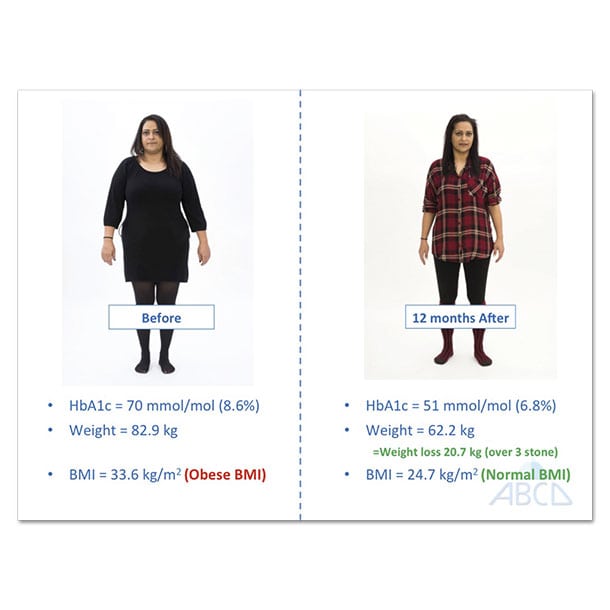
The first NHS Endobarrier clinic was undertaken in October 2014. Since then, 96 patients have been referred (41 accepted, 12 awaiting assessment, 44 excluded). 70% of patients achieved an HbA1c target<58mmol/mol, 40% are no longer obese. Weight fell by 12.3 ± 7.5kg (n20 P<0.0001) at 6 months and by 17.9 ± 9.7kg (n10, P<0.001) at 1 year. HbA1c fell by 14.2 ± 18.7mmol/mol (P=0.003) and by 23 ± 16.7mmol/mol (P=0.002) at respective intervals. Ninety fi ve percent of patients receiving Endobarrier would be "extremely likely" to recommend it (NHS friends and family test). Even with these small numbers the positive impact is clear and there is now an established infrastructure to provide this novel treatment. There was one early Endobarrier removal due to a gastrointestinal bleed and the patient made a full recovery.
Challenge
UK spending on type 2 diabetes at £8.8bn will rise to £15.1bn by 2035 - and complication costs exceed treatment costs threefold. With sufficient weight loss, there is improved glycaemic control, but diets have not worked on a population-level and have a high individual failure rate. It is counterintuitive to use diabetes medications associated with weight gain (insulin, sulphonylureas) in obesity. Some agents, such as GLP-1 receptor agonists, reduce weight but 75% of patients do not respond sufficiently. Many are reluctant to try bariatric surgery, given its invasive nature. Such surgery has limited availability, is expensive and permanent.
Objectives
To establish a fully operational effective, safe, innovative and cost-effective Endobarrier service for the benefi t of patients with diabesity in an NHS setting.
Solution
Endobarrier is an innovative 60cm intestinal liner device inserted by via the mouth. When placed, its forced re-routing of food achieves intestinal 'bypass' of bariatric surgery less invasively. It is potentially cheaper and could be made widely available. An advantage in its reversible nature is that it can simply be removed should any device-associated complications arise. Its temporary presence - rather than lifelong anatomical disruptions - empowers patients to make significant positive behaviour alterations over one year (rather than the few weeks of a diet). This aspect is crucial as there is good evidence that a large one year weight loss is a strong determinant of maintenance. The team's experience from leading the randomised controlled REVISE-Diabesity trial has informed this initiative of transforming the care of those with diabesity, by providing the Endobarrier treatment to selected patients in an NHS setting. The chief executive backed the project, providing strategic advice and asking the team to formalise the service protocol and identify and attach appropriate NHS payment by results (PBR) codes to all activities. He invited a negotiation to reduce costs of 20 Endobarrier devices from the manufacturers (financial year 2014-2015) and another 35 Endobarrier devices (2015-2016), and undertook to find funding for them. Several service planning meetings with the multidisciplinary and multispecialty team resulted in protocol formalisation and identification of all activities. Meetings were minuted with specific action plans for specific individuals. All NHS service documentation was reviewed by several team members. The following elements were devised:
- a defined patient pathway having dissected the patient journey to identify what would operate best within our NHS Trust
- visit proformas designed to capture specific data the service could be evaluated on
- a 1-page simple 'troubleshooting' guide for patients and gave a credit card sized 'safety alert' with safety advice and contacts to carry on their person.
The Emergency department was informed of the new service. The team undertook efficacy and safety analyses of the randomised controlled trial data which informed this service, eg use of combination Endobarrier+GLP-1RA is superior at weight and HbA1c reduction than Endobarrier alone.
Learnings
The key thing was to get the backing of the Trust's chief executive. He provided strategic advice and kick started the project by sourcing funding for reduced-cost Endobarriers. It is clear that the service is providing effective results, starting as early as three months and in a group of patients with refractory diabetes. We have acquired experience in how to advise patients to make best use of the device. There are considerable reductions in weight, BMI, HbA1c, systolic BP, ALT (a marker of fatty liver) and high patient satisfaction levels.
Evaluation
The SWBH Endobarrier NHS service was formally evaluated after the pilot case (April 2014) and after one year of initiation (November 2015). The measures evaluated included: referrals, numbers, sources, outcomes, demographics, HbA1c, weight, diabetes medications, safety aspects and patient satisfaction.