Summary
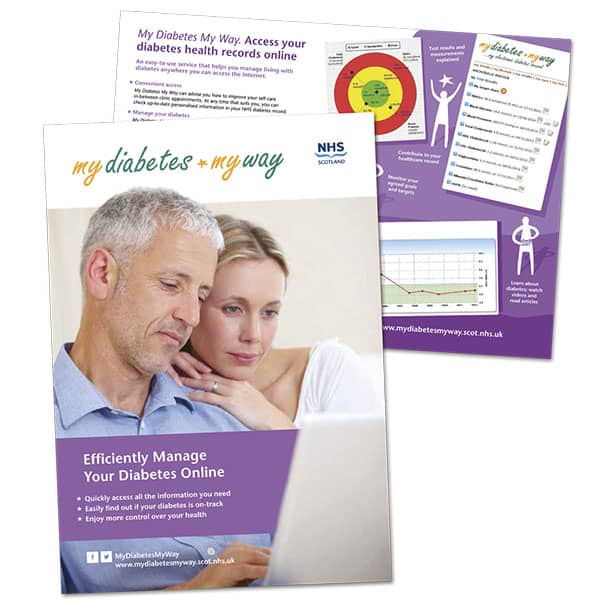
My Diabetes My Way (MDMW) is the NHS Scotland interactive website for people with diabetes and their carers. It contains multimedia resources aimed at improving self-management, including traditional information leaflets, interactive educational tools, videos describing diabetes-related complications and testimonials from people with diabetes talking about their experiences. MDMW also offers users access to their clinical data via its novel electronic personal health record (ePHR). The ePHR sources data from primary care, secondary care, specialist screening services and laboratory systems; including diagnostic information, demographics, process outcomes, screening results, medication and correspondence. These data provide a more complete overview of diabetes than is available from any single data source. Over 9,000 patients across Scotland have logged in and user evaluation shows that they find it a useful tool to aid self-management by improving knowledge and motivation to make positive changes.
Results
At the end of 2015, 7,464 patients (43% of registrants) had logged in (102% increase since end 2014; n=3,696). Levels of engagement remain high amongst active users. 3,164 (42.4%) logged in at least once during the final 3 months of 2015; 5,916 (79%) during the full calendar year. There were 42,396 total logins during 2015 (average=5.7/patient; median=3). During December 2015, 1,576 people with diabetes accessed their records (131% increase from December 2014; n=682). Analysis of patient measurements prior to using MDMW and one year after fi rst log-in show encouraging findings. Users of MDMW show a highly statistically significant improvement of 1.53 mmol/mol in HbA1c (p<0.001) among active users. Statistically significant improvements are also shown in albumin/creatinine ratio (p=0.015), body mass index (p=0.022), total cholesterol (p=0.002), HDL cholesterol (p=0.012), LDL cholesterol (p=0.001), diastolic blood pressure (p=0.007) and weight (p=0.003). 696 patients registered to use Diasend alongside MDMW during the first year of availability (March 2015 - February 2016). 123 patients accessed blood glucose data via MDMW and Diasend 647 times (5.3/patient). As of May 2016, over 9,000 people with diabetes have now logged in to MDMW, covering all health boards across Scotland and individuals aged 14 to 94. Around 1,000 of these patients are using Diasend to upload home blood glucose data.
Challenge
In 2008, a report by Diabetes UK estimated that diabetes accounted for around 10% of NHS expenditure, equating to £9bn per year, or £1m every hour. This was double a 2001 estimate (Department of Health, 2001), showing the impact of a rising prevalence across the UK. A subsequent report in Diabetic Medicine predicts NHS annual spending on diabetes will increase from £9.8 to £16.9bn by 2035, reaching 17% of the entire NHS budget. The challenge of supporting self-management in the expanding population of people with diabetes can be assisted through the use of technology, for example, by improving learning and education, much of which can be facilitated electronically. Internet based self-management support and electronic personal health records (ePHRs) have the potential to change the balance of power from healthcare providers to healthcare users and reduce the burden of care – but most existing ePHR systems present data residing on single silos, such as GP systems or hospital clinic records.
Objectives
To assess the levels of usage and uptake of the MDMW ePHR. To find out users' opinions and experiences of online diabetes data access and to assess the impact on routine clinical outcomes for MDMW ePHR users.
Solution
A project Editorial group consisting of patients, healthcare professionals and IT professionals oversees the design, development and management of the MDMW ePHR. The system exchanges data with SCI-Diabetes, NHS Scotland's flagship diabetes record. This system includes data from primary and secondary care, specialist screening systems (eg retinopathy screening, podiatry) and laboratories. Data include diagnostic information, demographics, process outcomes, screening results, medication and clinical correspondence. The system provides a more complete overview of diabetes than would be available from any single data source, such as an isolated primary care or hospital clinic database. Alongside these data is descriptive text explaining each assessment, detailing why they are recorded and what normal range values are. Further educational materials are presented alongside clinical results and are tailored to those using the service. History graphs and tables allow individuals to Patients can set and log their own personal goals and manually enter home-recorded information (weight, blood pressure, etc), or automatically upload blood glucose results through Diasend.
Learnings
Raising awareness of the service remains a challenge, particularly in primary care, but the project team has ensured that all hospital diabetes clinic waiting rooms contain advertising materials. Over 70,000 MDMW leaflets were distributed to healthcare teams in 2015. The Retinopathy Screening Service ensures that letters sent to patients contain the MDMW web address. Diabetes structured education programmes (DAFNE, TIM, TDEP, etc) actively encourage patients to register for MDMW as part of their course, engaging newly-diagnosed patients early. A further step to streamline the enrolment process has been to allow healthcare professionals to sign-up patients directly through SCI-Diabetes.
Evaluation
An evaluation survey was sent to all active users in early 2015. This questionnaire aimed to capture qualitative and quantitative data using a series or open and closed questions. Patients completed the questionnaire online using Survey Monkey and provided information detailing the impact the system had on their satisfaction and how it enhanced their ability to self-manage. System audit trails monitor usage and uptake using events such as user logins and pages viewed, along with date and time of access.