Summary
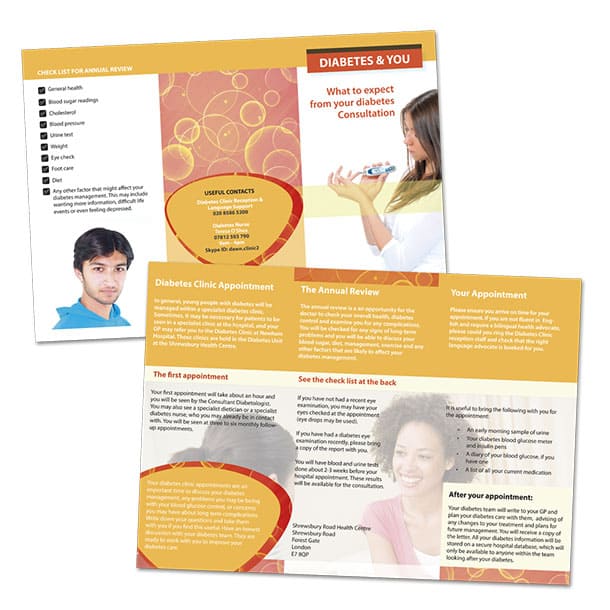
Newham, east London is the youngest borough in the UK with 40% of the population under 25 years old and more than 60% from ethnic groups. This leads to a high prevalence of type 2 diabetes, in young people. As a national pilot site for You're Welcome (DH 2010), Barts Health obtained feedback from patients and carers through focus groups and found that the three contributors to poor self-management were: poor/inflexible access to care; need for peer support; and lack of patient champions. To address this, the team pioneered the use of online diabetes follow-up via Skype, developed a local peer-support group funded by UCLPartners to provide a social platform for young people to discuss issues affecting self-management, and obtained funding for a youth champion to facilitate the peer-groups and help redesign the clinical service.
Results
We currently have 219 young people between 16 and 25 years attending the clinic: 162 with type 1 diabetes, 46 type 2 diabetes and 11 other. The work highlighted the adaptive use of Skype in order to fi t consultations around young people's daily lives, which was made possible through the technical functionality of Skype (messaging, 'online status') and their existing relationship with the clinician. This reflected in a lower DNA rate for Skype appointments compared to that of face-to-face outpatient appointments. For the majority of Skype consultations, the patient used Skype at home (86%). The second most frequent location was work or university (10%), followed by outdoors (3%). One Skype consultation was carried out during the patient's trip abroad.
Challenge
The prevalence of diabetes in Newham is around 5-6 times the national average, due largely to the local BME population. It is also the youngest borough in the UK and the sixth most deprived in the UK. A paediatric diabetes service had provided excellent diabetes care for children in Newham since 1986. However, transition to adult services was poor. The complex needs of adolescents and young adults with a chronic illness like diabetes was difficult to address in routine clinics. Non-attendance rates were high with increasing levels of patient and staff dissatisfaction. Even after the establishment of a monthly diabetes clinic in 2005, DNA rates continued to remain high (33-50%) with poor clinical outcomes.
Objectives
To make the transition from paediatric care more user-centred by improving access to services, developing a more holistic model of care that addresses the complex needs of young people and strengthening young people's ability to manage their diabetes.
Solution
Following a small technology audit with NHS Choices (2010), funding was obtained to examine the scope and feasibility of web-based consultations via Skype, where physical examination was not required. The success of the work led to a programme grant funded by the Health Foundation (DREAMS 2013-15), which specifically explored the role of Skype-based follow-up in those labelled 'hard to reach'. Young people were encouraged to initiate online contact as required and we began to provide a more open-access service, which was constantly modified based on patient/carer feedback. A core working group, involving outpatient administration staff, ICT managers and clinicians was set up and met regularly during the project allowing operational problems to be addressed immediately. Funding was obtained from UCLPartners (the academic health sciences network) in 2014 to set up and evaluate the role of peer support groups for young people. A launch meeting was held with attendance from multiple organisations (local providers, academia, Newham CCG, Community Links and Newham Council) to initiate the project and discuss the project plan, research questions and collaborative working. A co-design workshop was held in May 2014 with patients, carers, and a range of local partners including active Newham, the Food Academy, local employers, elected councillors and council-funded services like the local Stratford Arts Centre, to plan a programme of events. We were fortunate to be able to involve two students from the local sixth-form Chobham Academy, who worked with the project team and designed promotional material, attended some of the peer-group meetings and advised about the activities. In 2015, funding was obtained from the CCG for a Youth Champion, who has now been appointed jointly with the University of East London. The aim of the post is to facilitate the peer groups, raise awareness of diabetes and work with young people locally to help re-design services, making them more user-friendly.
Learnings
Young people live very varied lives. The use of Skype therefore needs to be aligned with the wider social and contextual factors in the patient's lives, as well as their clinical and technical knowledge and capabilities. However, there needs to remain a healthy mix of face-face and online contact. Patient champions, the use of digital and social media and peer-to-peer support are crucial to success. Collaborative working among all partner organisations (including those not traditionally involved in healthcare) is essential. Establishing and maintaining a service of this type requires a high level of commitment and support from staff.
Evaluation
A quantitative data and process evaluation was used for patients receiving Skype-based follow up, while qualitative data was obtained from eight patient focus groups, 26 questionnaires and 8 in-depth interviews.