Summary
The Emergency Assessment Bay has now been operational for almost three years and is one of a kind as a facility to accommodate emergency care and treatment for haemato-oncological patients within an Acute Trust.
Prior to the facility opening there was uncertainty about how the models of care and patient pathways would work and how the service would be received both by patients and the wider healthcare economy.
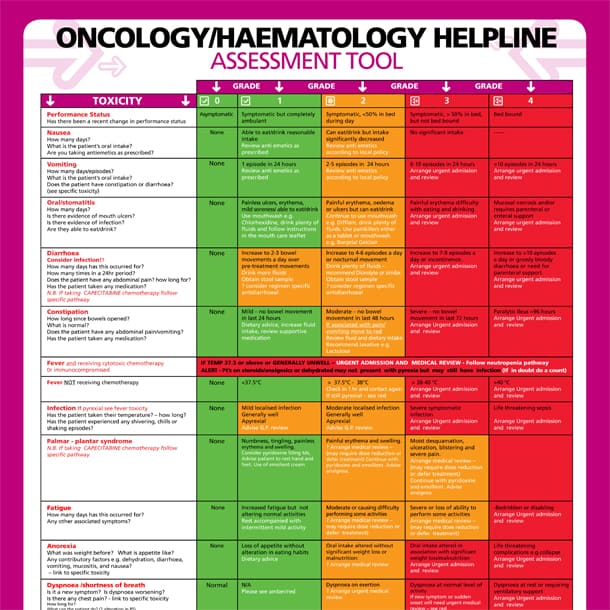
The model has exceeded all expectations with positive feedback from patients, carers and healthcare professionals accessing the facility. The Directorate is committed to reviewing systems processes and, where required, revising constantly staffing models and resource requirements. The use of the 24-hour Telephone Assessment Tool has enabled appropriate triaging of patients to ensure that safe, effective and appropriate clinical care and/or advice is given, and defined clinical pathways ensure on-going relevance to patient management.
The sustainability of the service is demonstrated through an on-going audit, as seen in the Directorate’s End of Year report (see Resources). Data support the use of the Emergency Assessment Bay with a continuing increase in activity since the facility opened.
Challenge
Appropriate intervention and treatment of oncological and haematological emergencies, which can be of a life threatening nature, is imperative in ensuring positive outcomes in terms of disease management and prognosis.
An Emergency Assessment Bay (EAB), with specialist nursing care and dedicated medical cover 24/7, was introduced following the opening of the new Cancer Centre. Its purpose is to provide oncology and haematology patients with access to more appropriate and timely care in an environment where they would reap the benefits of an efficient patient flow – while also reducing the number of patients attending the busy A&E Department.
In addition to improving the patient experience, it was hoped that the overall quality of care would improve through:
- Timely and appropriate intervention,
- Early diagnostics and implementation of treatment,
- Reducing in risk by patients being appropriately managed by specialist teams,
- Avoiding inappropriate admissions with the potential for reduction in length of stay.
This was an innovative approach to managing patients requiring specialist input within an acute care setting, where pressures such as bed management, emergency flow and patient outcomes needed to be addressed.
Objectives
These were set to:
- Ensure timely and effective management of haemato-oncological emergencies by providing direct access to the Cancer Centre
- Act in accordance with national directives to provide urgent specialist treatment to patients receiving systemic anti-cancer treatment
- Manage effectively bed pressures thereby reducing pressure on emergency portals
- Improve the patient care pathway and access to an expert workforce positively affecting patient experience
- Improve patient outcome associated with emergency management of oncology/haematology emergencies.
Solution
The project of putting EAB into practice has been completed and is embedded into the philosophy of care for managing acute oncology emergencies. The team believes the development of a dedicated emergency assessment area is beneficial to patients, enhancing their experience of attending the EAB rather than busy emergency departments along with providing a benefit to the Trust by reducing the impact on A&E and also the wider healthcare economy with regard to developing specific oncology/haematology patient pathways.
Activity at the EAB is regularly monitored to ensure that patients receiving systemic anti-cancer treatments are getting specialist, emergency care and that their experience of their care pathway is being managed effectively.
The Directorate is committed to ensuring that the team can demonstrate that safe, effective patient care is being delivered and that patients have been managed appropriately. There has also been an audit of the patients’ experience of the EAB; the results of which are discussed below.
Results
The End of Year Report 2011-2012 demonstrated an increase in the number of patients contacting EAB for triage assessment. Activity for 2011- 2012 confirms that there have been 498 more people have been in contact with the EAB compared to the previous year. This represents a 23 per cent increase on 2010-2011. There has been a slight variation in the number of oncology patients contacting EAB as opposed to those from haematology.
A patient experience survey has been completed and revealed that patients didn’t encounter any difficulties contacting the EAB for the initial triage assessment; 100 per cent of patients were seen within 30 minutes of arrival into EAB; 90 per cent of patients were very happy with the environment in which they were being cared for and 100 per cent of patients stated that their privacy, dignity and modesty were respected at all times while a patient in EAB.
Evaluation
Currently the majority of patients admitted as an acute oncology emergency come through the EAB. This service has received verbal feedback from patients including a Real Time Quality Monitoring in October 2010, undertaken by NHS Stoke Primary Care Trust, which reported that a patient had stated ‘that she had been admitted during the night via the emergency assessment bay within the unit. She found this very helpful as it avoided a trip to the Emergency Care Centre and she was admitted on to the ward that she was familiar with’ and also that ‘the emergency helpline and assessment bay appear to be well used and help to alleviate the stress experienced when a patient becomes unwell at home.’
Verbal feedback from patients has revealed that they have experienced the following benefits since the EAB was put in place:
- Access to expert medical and nursing staff available 24/7
- Direct access for patients/carers/relatives/healthcare professionals to specialist advice
- Timely and efficient assessment, intervention and initiation of treatments
- Improved patient journey
- Environment conducive to caring for oncological and haematological emergency conditions
- Removed prolonged waits in the Emergency Care Centre, which could be detrimental to patient outcome Provides patients with reassurance and peace of mind, having confidence in service delivery and their on-going management
- Patients more willing to attend as emergencies, allowing for better care and outcome.
The success is also measured through on-going and regular patients experience audits with regard to end of treatment questionnaires; environmental audits; ‘one-hour to antibiotic’ for patients with neutropenic sepsis; CQC reviews; the peer review process and patient experience surveys of the pathway through EAB. The Directorates also intends to include EAB on the In-Patient Survey through the Meridian system and to ensure that it forms part of the Net promoter scheme.
Impact
The EAB was introduced with the aim of putting the patient at the centre. The provision of safe, effective and timely care in managing their oncological/haematological emergency has always been its intended use. The impact on patient care has: avoided admissions; provided patients with appropriate medication, advice and on-going support; reduced length of stay and associated risks of hospital acquired infections and improved the overall satisfaction and experience of the emergency care pathway for patients attending EAB at the Cancer Centre.