Summary
Haemoglobin A1c (HbA1c) measurement is important for monitoring glycaemic control in people with diabetes (PWD) but, during the COVID-19 pandemic, access to an up-to-date HbA1c measurement for PWD was challenging. An innovative and cost effective at-home capillary blood collection system was needed, which was accurate, reliable and user friendly for patients. After development and validation, 286 postal HbA1c kits were sent to PWD in October- December 2020. The return rate was 87%. Subsequently the project has been integrated successfully into the diabetes service and 905 kits have been sent to PWD, with an encouraging return rate of 80%.
Innovation
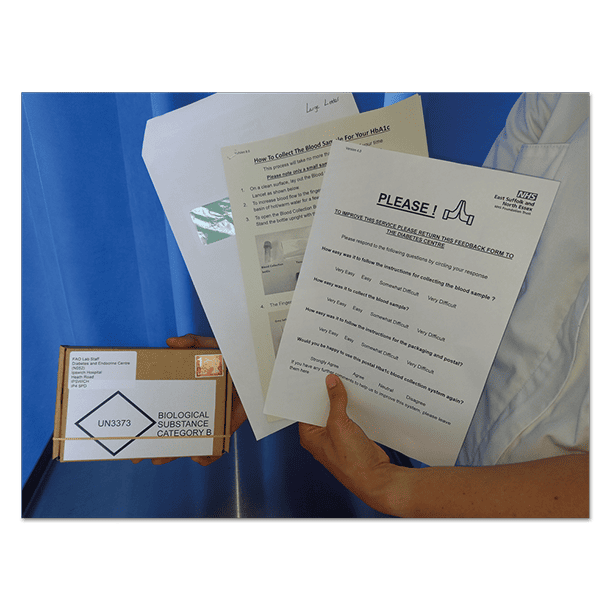
The need for social distancing and patient hesitation to attend healthcare facilities made it difficult to obtain a HbA1c measurement for use at the virtual consultation. A remote HbA1c monitoring solution needed to demonstrate accurate, reproducible results and to be user friendly for both staff and PWD. A postal HbA1c system was designed for patients to take a blood sample at home at their own convenience. This was returned in secure packaging and tested on the centre’s two point-of-care Siemens DCA Vantage analysers, which provided reliable results within six minutes. These analysers had been used in the Diabetes Centre for over 20 years and were available in clinics throughout the UK. Each remote kit cost £2.63 per patient, including supplies and postage. This was significantly more cost effective than other remote blood collection methods. For accuracy determination, 123 small capillary blood samples (5-10 drops) were independently collected. Samples were tested on the day of collection on the Siemens DCA vantage analyser, stored at room temperature for up to 12 days and then tested again. Once accuracy was determined, postal HbA1c kits were designed to meet the Packing Instruction 650 regulations that govern the transport of biological substances. Kits included the equipment and photographic instructions to aid PWD to collect a small sample of blood from their finger, and instructions to safely package and post their sample back. Feedback forms were included. This was the first methodology developed to obtain a blood sample from PWD at home that provided reliable, accurate HbA1c results.
Results
The accuracy testing for the stored blood samples was successful. During October-December 2020, 286 kits were sent out to PWD requiring an HbA1c prior to their virtual consultation. Of the 210 returned kits (73%), only one sample failed. Of those who did not provide a sample, some had already had a recent HbA1c, were out of the country, or had deferred their appointment. Removing frequent non-attenders, the return rate was 87%. To date, 905 kits have been sent, with a return rate of 80%, demonstrating continued engagement. The remote HbA1c testing ensured no backlog of appointments during the pandemic, and enabled 2,385 virtual clinic appointments from October 2020 to June 2021. Phlebotomy and HCA time was better used and no additional staffing was needed. Phlebotomy patients who chose not attend in person were provided with a postal HbA1c kit. The postal HbA1c is significantly less expensive than other alternatives, with a small cost implication for non-returned kits.
User Feedback
The overwhelming majority of feedback from PWD and clinicians was positive. Of those who returned initial feedback forms, 94% agreed that they would use the kits again. From December 2021- June 2021, 87% of PWD who provided feedback would use the postal HbA1c again and 5% would not. A five-point Likert scale survey, with an additional two free-text questions, was sent to diabetes consultants, dietitians, diabetes specialist nurses and diabetes research nurses who used the postal HbA1c system for their patients. Of respondents, 100% strongly agreed that the service has been useful during the pandemic and had positively impacted patient care. They felt the new pathway was efficient and would remain useful after lockdown. 100% said they would recommend the service to other clinicians and strongly agreed or agreed that it would be useful to offer the postal HbA1c to other patient groups.
Dissemination and Sustainability
The postal HbA1c project gave clinicians access to vital, up-to-date HbA1c measurements where, in some cases, there was no alternative. This both sustained and improved patient care during the pandemic, whilst protecting vulnerable patients and reducing footfall into the hospital. The simplicity of the methodology has allowed a wide cohort of PWD to benefit. The cost and time burden of attending an appointment face to face is reduced, helping to prevent health inequalities. Many PWD would benefit from the convenience of collecting and posting a sample at a time that fits in with them, helping them to take control of their own healthcare. The process requires little training to run smoothly and needs minimal equipment. A comprehensive system of letters, text message reminders and planning has contributed to a successful return rate. It could be adopted into other diabetes care settings and may be of value within other patient groups.