Summary
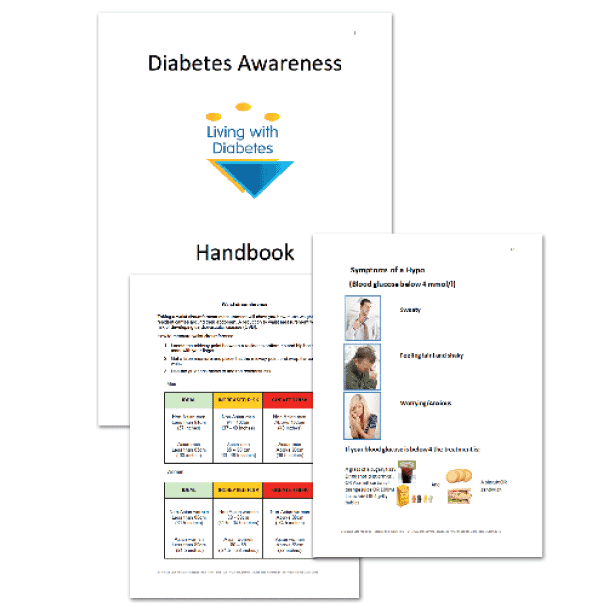
The Diabetes Awareness care home training was developed by the patient education team in Hull. Targeted at care home managers, nursing, auxiliary and catering staff in the East Riding of Yorkshire, it was designed to address key recommendations specified within the good clinical practice guidelines for care home residents with diabetes. Content included basic physiology of Type 1 and 2 diabetes, introducing medications, symptoms and management of hyper and hypoglycaemia, diet and lifestyle interventions, goal setting and action planning. The one-day sessions were led by a diabetes specialist dietitian and nurse and used workshops, visual presentations and written activities to ensure learning objectives were met. Participants were asked to develop action plans identifying any changes required and strategies to implement them.
Results
Training was attended by 93 staff representing 32 care homes situated throughout East Riding of Yorkshire - 81% evaluated the course as ‘Excellent’, the remainder as ‘Good’. The three-month post-course evaluation showed an average of 39% increase in confidence supporting residents with diabetes. All information covered during the training was included within the course handbook, enabling attendees to disseminate information to their peers. The 3-month evaluation audit showed all care homes had implemented the Diabetes UK Care Planning Passport thus enabling care staff to identify: residents’ risk and preferred treatment of hypoglycaemia, date of annual review and delivery of the 15 health care essentials and foot risk. Participants reported catering changes in all but one care home. Residents were no longer offered sugar-free options, resulting in improved nutritional status and quality of life. Attendees were encouraged to develop an action plan, enabling each home to identify key priorities. After three months, all care homes reported they had implemented, or were in the process of implementing, their individual goals.
Challenge
Older adults with diabetes have a two- to four-fold increase in the risk of hospitalisation with one of the factors increasing this likelihood being care home residency. 25% of those occupying beds are from the 75+ age group, representing a cost of over £140 million per annum. Emergencies such as hypoglycaemia are highly prevalent in residents given their advanced age and multiple co-morbidities and bring with them their own cost implication of an estimated £314 per ambulance call out and A&E visit.
Objectives
To create ‘Diabetes Awareness’ education for care home staff so they could understand the difference between the types of diabetes and an introduction to diabetes medications. To understand the symptoms of hypo and hyperglycaemia – how to respond. Prevention of complications and focus on foot care, with improved communication between care homes, primary and specialist care. Also, to identify areas for improvement within the home and develop an action plan.
Solution
The Education Sub Group of the local Diabetes Network was approached by the council to provide a commissioned training package that incorporated council objectives. The team, comprising a lead physician, specialist dietitian, nurse and podiatrist, met to agree objectives using the suggested training day content from the national practice guidance as a backbone for the project. Curriculum and course resources were developed to meet the learning objectives identified. A comprehensive range of adult learning principles were included in addition to knowledge-based quizzes to ensure learning objectives were achieved. Quality assessment of the course content, teaching materials and resources were completed by the diabetes education subgroup and MDT. A risk assessment of the potential impact on non-nursing staff was undertaken - the primary concern being that an increase of awareness could result in carers working beyond their remit. To address this, a learning objective was developed to ensure carers were aware of roles of primary health care and the specialist service in encouraging better communication and contact with supporting services.
Learnings
Anyone working with individuals who have diabetes is aware of the vast amount of myths, incorrect and outdated information in circulation. The majority of care homes were providing sugar-free menus, had limited to no knowledge of carbohydrates and perhaps most concerning was the lack of knowledge surrounding the risk and management of hypoglycaemia. Course attendees were receptive to making changes within their care settings, with sessions on lifestyle, care planning and identifying gaps within their own record keeping being the most useful. All nursing and non-nursing staff should have access to the diabetes training including catering staff. There needs to be a rolling programme of training due to the high turnover of staff. Senior and managerial staff attendance should take priority, due to their influence over policy change and dissemination of information.
Evaluation
To evaluate the success of the learning objectives, the following methods were used:
- Post-course evaluation form
- 3 month evaluation audit
- Knowledge-based quizzes
Further evaluation will be carried out over the next 6-12 months to determine the long-term impact on the target demographic.