Summary
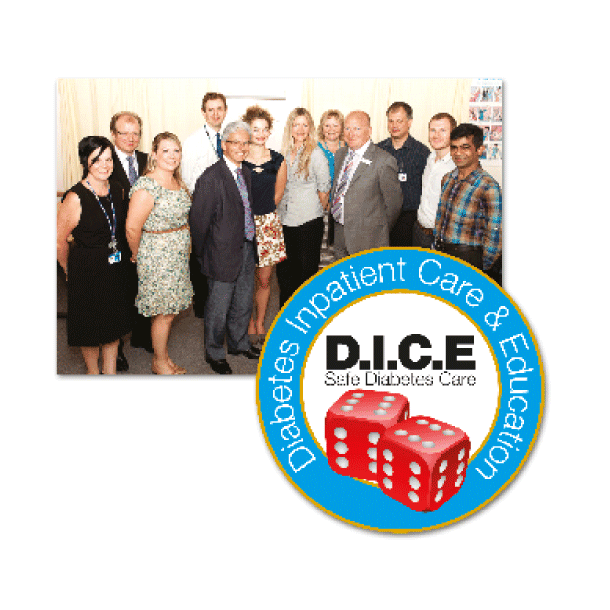
The Diabetes Inpatient Care and Education (DICE) project was planned to reduce harm to patients with diabetes in Ipswich Hospital by establishing a fully-staffed, proactive inpatient diabetes team focused on improving care through innovation and implementation of new systems of care. These aimed to increase specialist surveillance of patients with diabetes, improve staff knowledge and awareness of the condition and evaluate its effectiveness by continuous audit. Innovative strategies and tools included an admission avoidance service, algorithms for admission units, the DICE Care Pathway, an innovative referral system (the Diabetes Patient At Risk score), use of web-connected blood glucose monitors, strategies to prevent nocturnal hypoglycaemia, a junior doctor induction programme and a foot protection pathway. Overall, hypoglycaemic rates reduced by 25% but severe hypoglycaemia fell by 46%.
Results
The DICE project has resulted in significant reductions in hypoglycaemic episodes, foot lesions and reduced length of stay. The Diabetes Patient at Risk Score (DPAR) was well accepted, successfully identified appropriate referrals and facilitated referrals in a timely manner considerably improving on the previously used ‘Think Glucose’ traffic light system - and importantly encouraged nursing staff to directly refer. In an evaluation, the DICE chart was shown to have increased the knowledge and confidence of 96 trainee doctors and 390 nurses. Using NaDIA data for 2012 (before DICE) and 2013 (after), severe hypoglycaemia decreased from 15.4% to 9.7%, medication errors from 56.9% to 21.1% and insulin errors from 31% to 7%. The reduction in hospital-acquired foot lesions has been greater than that seen in people without diabetes. Second hypoglycaemic events have reduced by 80% and in a study of length of stay for non- diabetic and diabetic populations, the latter was reduced significantly by approximately 1 bed day.
Challenge
The National Diabetes Inpatient Audit (NaDIA) found that people with diabetes frequently experience poor care resulting in unsatisfactory outcomes, there is little investment in inpatient diabetes teams and length of stay has not altered. Although most diabetes specialists believe that inpatient diabetes teams improve care, funders do not appear convinced. The DICE project aims to provide as much evidence as possible to support the statement that ‘every hospital should have a fully staffed inpatient diabetes team’.
Objectives
To improve inpatient diabetes care across a whole organisation and to evidence this by establishing an innovative inpatient diabetes team. To make an in-depth study of the whole pathway of care from admission to discharge, creating strategies and tools to address the observed deficiencies and barriers.
Solution
A proposal was put together which successfully received joint funding from the Ipswich Hospital NHS Trust and Sanofi Diabetes, with the support of the CEO, Medical Director, Director of Finance and Director of Nursing. In July 2013 the Diabetes Inpatient Specialist Nurse (DISN) resource was increased from 0.5 whole time equivalent (WTE) to 2.5 WTE. A team consisting of the diabetes centre’s lead specialist nurse lead, the DISNs, diabetes consultants, a research fellow, inpatient podiatrist, medical illustrators, and the hospitals IT staff was put together, drafting in others as appropriate to advise on implementation: e.g. ward matrons, hospital pharmacists, the foot team, dietitians and catering managers. The whole team met to discuss the issues and agree the plan.
In the first six months, the newly-appointed DISNs sat in on clinics, and education sessions, and observed care at during the baseline bedside data collection using the NaDIA questionnaire. They reported back and worked with the team to find better ways of delivering care. Weekly meetings of the project team would explore the care issues identified by the DISNs, develop innovative solutions, and plan the implementation and evaluation of these.
Learnings
It is important to develop a strong a proactive team through having a common and valued goal, regular meetings to team bond, problem solve and develop implementation strategies. Management, both clinical and not clinical, must share this goal and should preferably be involved in the project team. Have a thorough understanding of the needs of the patients and the staff by close observation and questioning. Above all, keep your innovations simple, have clear plans for implementation and have these agreed by all - in particular by those directly affected. Constantly obtain feedback and continuously audit. Something working well can easily slip off the radar of busy staff.
Evaluation
The project is ongoing and a full health economic analysis will be produced - nevertheless, based on the current results, the team believes the savings will be substantial.