Summary
Following the national lockdown in March 2020, Luton and Dunstable University Hospital (Bedfordshire Hospitals NHS Foundation Trust), had to find a remote solution for patients referred with suspected skin cancer. These patients experienced considerable anxiety, which was compounded by worry about infection risk. The answer had to align with government guidance for two week wait (2WW) cancer pathways, be clinically safe and not introduce delays in patient management. The result was a novel, digitised end-to-end web-based teledermatology solution, using the Pathpoint eDerma platform. Despite losing staff through redeployment, shielding and lack of locum doctors from abroad, the 2WW pathway continued, with high levels of patient and clinician satisfaction. A total of 43% of 2WW referrals were assess though eDerma using only two staff members, with excellent outcomes and high levels of patient satisfaction. Face-to-face (FTF) consultations were provided for 57% of referrals, plus urgent cancer treatments, with strict infection control measures. For the first three quarters of the financial year 2020/21, the service was underspent on staffing costs by £184,000. Without eDerma, the service would have had severely restricted capacity for non-cancer pathways.
Method
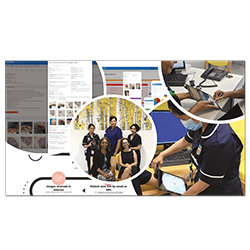
Despite losing four dermatologists due to redeployment to the COVID wards, travel restrictions, self-isolation and clinical shielding, the web-based, accessible nature of eDerma allowed flexible working. Remote assessments used patients’ uploaded images. Staff were trained to use the platform quickly in one day. Ongoing support was gained from the Trust. Information leaflets were devised and posted to patients beforehand, so that they knew what to expect from their appointment. Outcomes were measured via: reports taken directly from eDerma digital records; a patient and user satisfaction survey; a comparison of eDerma outcomes with those from Advice and guidance on electronic staff records (ESR).
Results
In total, 525 patients (43% of all 2WW) were assessed between April 2020 and February 2021 by one nurse and one consultant. Each consultant assessment took an average of six minutes. This represented a considerable time saving on a F2F clinic with distancing, which allowed 30 minutes per patient. Outcome measures showed: no nurse initial histories were rejected for poor quality; 54.5% of patients booked directly for skin biopsies; only 1.5% of patients needed subsequent urgent F2F review for diagnosis; 23.2% of patients were booked for routine FTF review; 20.8% of patients were discharged; 95.6% of assessments took place within 72 hours and information was sent to GPs and patients; Cancer Outcomes and Services Dataset (COSD) targets for multidisciplinary team discussion and staging were met. The eDerma platform combined teledermatology and clinical workflow in a cloud-based clinic, placing patients into the right pathways (clinic review, biopsy, discharge to GP) at the point of triage. The platform was developed in accordance with British Association of Dermatologists Quality Standards for Teledermatology. The agreed clinical criteria, nurse-led, initial triage and high-quality image capture, enabled the majority of assessments to be completed remotely by a consultant dermatologist without the need for a FTF urgent appointment. This resulted in a significant direct cost saving, with regards to locum spend, and reduced indirect costs. There was a benefit to patients who could not, or did not want to, attend FTF clinic appointments. This approach proved essential during COVID-19 restrictions. The eDerma system enabled remaining staff to maximise their effectiveness. Essentially one shielding nurse and one consultant assessed 43% of patients referred on the 2WW pathway. With built-in, digital sign-on-screen patient consent, images that were saved onto the platform and coded to specific diagnoses could be accessed by the clinical team to support education and training. Data were captured in real time and coded using SNOMED-CT terminology. As a result, eDerma supported ongoing audit and quality improvements. Despite the reduction in staff, the 2WW pathway was maintained using the adapted digital systems and shielding staff, accurate diagnoses were made, and reassurance was provided to patients with suspected benign lesions. Anxiety about the risk of infection and delayed diagnosis was allayed. Issues with mobile phone upload were managed by sending photos to a secure mailbox. Essential F2F assessments were prioritised as necessary. Patients in need of urgent surgical procedures were operated on under COVID-secure measures. In-person care was never suspended, but focused where it was needed.
Sustainability and Spread
This innovative service was co-designed by the dermatology team and the supplier, Open Medical (OM), with full commitment to ongoing funding from the Trust. The software is available to any NHS dermatology department via the Government Digital Marketplace (‘G Cloud’). OM makes system updates on request. The cost savings far exceed the price of the product. OM trains new users (specialist nurses, dermatologists) and provides a support helpdesk, as well as being accountable for patient data security and protection. OM operates an ‘Open Application Programme Interface’ policy, enabling data generated within the software to be shared with the electronic patient record, while preventing duplication of existing demographic data by integrating with the NHS Spine. Any hospital IT barriers can be overcome by using the software as a standalone. Cloud software means it is accessible on any web browser device. A straightforward user guide helps patients take the desired quality of images at the first attempt. Additional help is provided via the telephone. OM supports evaluation by providing periodic data reports on operational trends. Reports can be pulled directly for audits on outcomes. Experiences have been shared with other teams in remote meetings nationally. The British Association of Dermatologists asked Clinical Director, Dr De Silva, to present a video on resetting services during COVID-19 for the Royal College of Physicians. A case study was prepared for the NHSX digital dermatology playbook and data will be presented to the NHS England Outpatient Transformation and teledermatology teams. Discussions are ongoing regarding expanding this model to Rapid Diagnostic Care centres.