Summary
The Pathfinder Diabetes Project launched 15 years ago to address some of the unmet needs of people with diabetes. In this model, GP practices identify cohorts of difficult diabetes patients with poor HbA1c control for a one-off advice and management plan by the consultant/diabetes specialist nurse every two to three months. This model fits with the Right care, Right here model of care advocated by the SWBH Trust in devolving care into the community, giving ownership to patients and carers. Recent audits show a 50% to 62% reduction in HbA1c levels and the model is now being rolled out to 80 practices.
Results
Diabetes management skills in primary care have improved significantly. Patients like this service closer to their homes, as shown by good attendance rates and satisfaction surveys.
Routine new hospital referrals have decreased significantly, and surveys of GPs and patients have shown that primary care value this service enormously.
The service has helped achieve cost savings and attain RCRH model of care by devolving care into community care, leading to increased hospital clinic capacity. People with diabetes have benefited from improved self empowerment and ownership, along with increased awareness of when to seek help. They are seeing fewer complications and hospital visits.
Challenge
The Sandwell and West Birmingham catchment population has a high prevalence of diabetes, leading to significant morbidity and mortality. Challenges included a lack of clinical engagement and partnership, and inadequate care planning, with poor levels of joined-up care and insufficiently engaged patients.
Diabetes care was also hampered by an absence of of integrated IT systems, poor clarity regarding finances and responsibility and a lack of robust clinical governance structure.
As a result, diabetes care was full of gaps and duplication in service. This eventually resulted in an inability to build capacity and capability in primary care and to progress towards better management of diabetes patients.
Objectives
The project had a long list of goals, among them: to upskill GPs and practice nurses (PNs); to reduce ‘do not attends’ (DNAs); to increase patient satisfaction; and to improve diabetes control by reducing HbA1c.
It also aimed to provide care without financial boundaries, to build capacity within primary care, to improve appropriate referrals to secondary care and to improve communication between GPs/PNs and specialists.
Finally, the project hoped to improve formulary compliance and value for money prescribing, reduce hospital and A&E admissions with hypos and DKA, and to increase the uptake of structured education programmes.
Solution
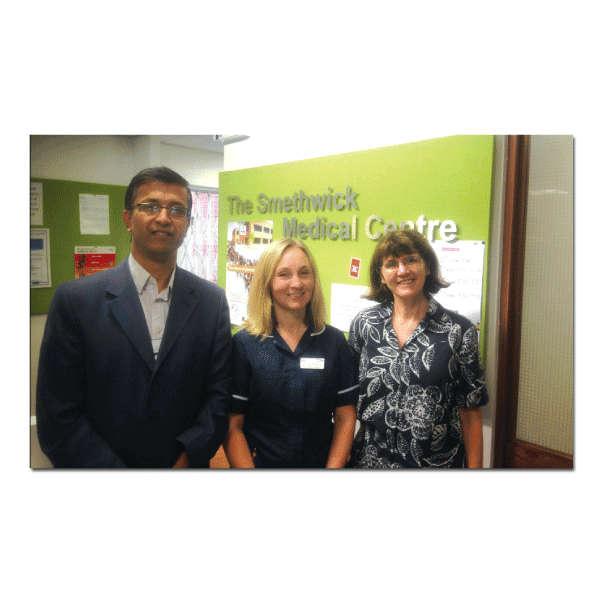
The project initially involved just two GP practices in Smethwick. Under the Right Care Right Here (RCRH) programme, this was expanded in 2010, then again in 2011.
Our model centres around providing joint diabetes clinics within GP practices for a one-off advice and creation of management plan by the consultant/diabetes specialist nurse, who run a parallel clinic. The primary care team then takes this plan forward and puts it into action.
Referral criteria depended on locally agreed pathways, frequency of clinics and methods of dealing with interim queries.
All local GP and primary care clinicians now have access to clinical support and practice diabetes teams on an ongoing basis.
Learnings
The team learnt that convincing stakeholders of the benefits of joined-up primary care/specialist diabetes working was perhaps the biggest challenge. Engaging Trust/CCG about the financial aspects of a mutual service needed to be planned and to make clear potential benefits.
It was also important to ensure robust structures were in place and clear to practices, and to discuss individual practice needs well in advance.
Evaluation
As a result of devolvement of routine diabetes care, the team has been able to free up capacity to see more new referrals (and develop complex, specialist diabetes clinics. The Trust has benefited from a consultant-delivered in-patient Think Glucose service.
Diabetes care is now closer to home, with improved patient attendance and satisfaction. Empowered GP staff are better placed to manage diabetes in community with specialist back-up. Reduced hospital referrals have driven cost savings, as have formulary compliance and value for money prescribing.