Summary
The Cheshire and Merseyside Collaborative Working Project aimed to enhance diabetes care in Liverpool, Sefton and Knowsley. This initiative involved reviewing community diabetes services, conducting population health analysis, and mapping service pathways. The project, a collaboration between Cheshire and Merseyside ICB and Sanofi, focused on optimising care delivery and reducing variations. It found significant service variations, identified areas for improvement, and proposed solutions. Outcomes included improved patient care pathways, reduced waiting times, and better treatment options. The project recommended standardised data analysis, stakeholder collaboration, and future metrics for cost-effectiveness. Next steps include implementing actions and strategic planning.
Innovation/Novel approach to an existing problem
Rather than simply shifting services online, the project took a wide-angled view of improvement. A comprehensive population health analysis used data to explore prevalence, standards of care, and hospital interactions. This helped pinpoint gaps and guided strategic decisions. Interviews and questionnaires from clinicians and patients were used to understand current pathways and barriers to care. The team collaborated with commissioners, GPs, secondary and community services to agree on key findings and shape collective action. Converting professional questionnaires to digital formats boosted primary care engagement and yielded richer data. Face-to-face meetings helped stakeholders digest findings, discuss challenges, and agree next steps. Though data access was limited in parts, performance indicators were used to monitor outcomes. Tailored reports for Liverpool and Sefton offered detailed, comparative insights. Infographics were created as clear, visual benchmarks to track change and communicate key findings. Rather than focusing on virtual clinics, the project tackled diabetes care on multiple fronts: data, service design, and engagement. The blend of quantitative analysis and stakeholder insight ensured recommendations were practical, evidence-based, and ready to deliver real impact.
Equality, Diversity and Variation
The project identified significant variations in diabetes care across Liverpool, Sefton and Knowsley. These included differences in service models, investment levels, and care standards, leading to unequal access to diabetes care and disparities in health outcomes. The aim was to standardise care and reduce variations through a comprehensive review and analysis of community diabetes services and population health data. Stakeholders from commissioning, primary care, secondary care, and community diabetes services were engaged to reach a consensus on key findings and proposed actions. This ensured that the proposed solutions were well-informed and widely accepted, facilitating meaningful change. Digital format questionnaires increased engagement, especially in primary care, giving richer data, leading to more informed decision-making and improved access to diabetes care. Targeted interventions addressed specific patient needs. Face-to-face consensus meetings reviewed analysis findings and agreed on barriers and proposed actions. Facilitated discussions ensured that the final recommendations were well-supported and appropriate for the local context. Patient outcomes and experiences were improved by implementing targeted interventions based on comprehensive data analysis and stakeholder feedback.
Impact to Patient Care
The Cheshire and Merseyside Collaborative Working Project had a profound impact on patient care by improving access, targeting interventions, enhancing care pathways, reducing waiting times, providing equitable care, improving patient outcomes, and addressing emotional support and education needs. Through comprehensive data analysis, stakeholder engagement, and innovative use of digital tools, it successfully addressed key issues related to diabetes care and drove meaningful change across Liverpool, Sefton and Knowsley.
Results
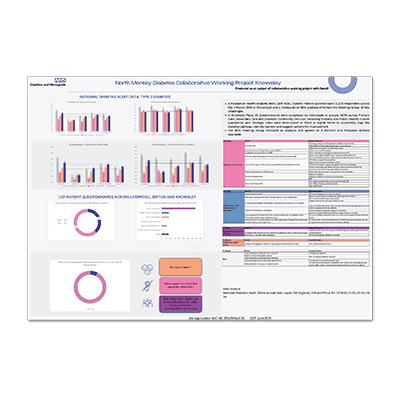
The Cheshire and Merseyside Collaborative Working Project was conducted over six months, from Q4 2024 to Q2 2025. A population health analysis utilised National Diabetes Audit (NDA), Quality Outcomes Framework (QOF), and Hospital Episode Statistics (HES) datasets to identify variations in care delivery and management standards. This highlighted areas needing improvement, such as the delivery of the eight Care Processes and the achievement of the three Treatment Targets. Qualitative data was collected from clinical stakeholders through interviews and questionnaires, which identified barriers and proposed actionable solutions to enhance care delivery and patient outcomes. Stakeholders from commissioning, primary care, secondary care, and community diabetes services were involved, ensuring well-informed and widely accepted solutions, facilitating meaningful change. The initiative mapped out barriers in diabetes pathways and proposed solutions, leading to more efficient and effective care delivery. Patients received the right care at the right place and time, reducing waiting times and improving health outcomes. By standardising diabetes care and reducing variations in service models and investment levels, the project ensured consistent treatment across Liverpool, Sefton and Knowsley. All patients received high-quality diabetes management. The project identified the need for more emotional support and patient education, leading to the creation of patient support groups and the inclusion of emotional support resources in primary care. This improved patient engagement and self-management, leading to better health outcomes. The project’s detailed analysis and targeted interventions ensured that resources were allocated effectively to areas needing improvement. The project focused on reducing complications and healthcare costs associated with diabetes. By meeting these targets, the project contributed to better health outcomes and reduced long-term healthcare costs. The collaborative funding model and targeted interventions ensured that the project was economically viable and provided better value.
User Feedback
The Cheshire and Merseyside diabetes initiative spanned three place-based partnerships – Liverpool, Sefton and Knowsley – each referring into Liverpool University Hospitals and Mersey & West Lancashire Teaching Hospitals for specialist support. By extending beyond individual trusts, the project aimed to harness regional insights and drive system-wide improvements in diabetes services. Feedback was gathered over six months via digital questionnaires, anonymised focus groups, and monthly stakeholder forums. Anonymity in surveys minimised social desirability bias, while purposive sampling ensured representation from primary care clinicians, specialist teams, commissioners, and service users across all three localities. Data triangulation helped validate findings and reduce the influence of any single respondent group. All feedback was reviewed in the project’s steering committee, which met monthly to prioritise themes and assign action owners. A live feedback dashboard tracked progress against user-reported satisfaction scores and professional endorsement rates. This closed-loop mechanism ensured that emerging issues were addressed swiftly. These insights directly shaped the rollout of peer-led support networks, digital self-management tools, and embedded mental-health resources in primary care surgeries. The Project demonstrated strong support from stakeholders, including healthcare professionals and service users.