Summary
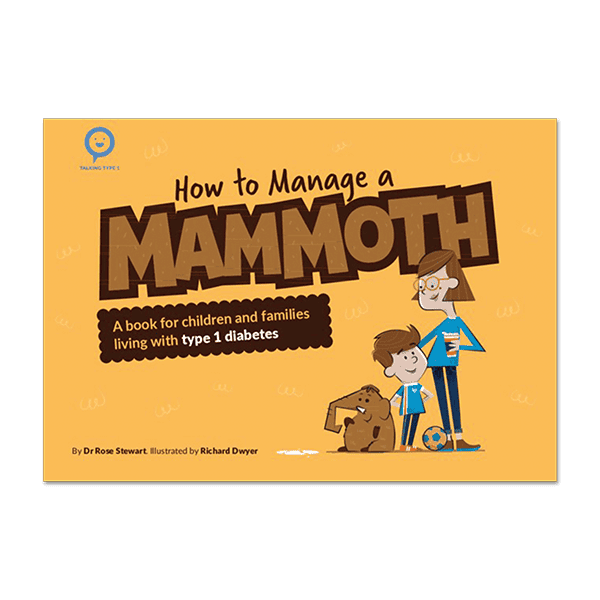
How to Manage a Mammoth is a book-based psychoeducation intervention for young children with diabetes and their families. By incorporating elements of acceptance and commitment therapy into an engaging and interactive story, the book supports diabetes teams and families to discuss difficult topics, such as diabetes distress and burnout. The book has been published across NHS Wales, England and beyond, and has been made in to an animation, as well as forming the basis for multiple therapeutic groups and individual interventions across the UK and Ireland.
Innovation
Diabetes psychology support is often in short supply. Many are reluctant to see a psychologist or have lower levels of distress, but would still benefit from increased psychological knowledge and skills. The Talking Type 1 book range uses a bibliotherapy approach to give people with diabetes information and strategies to help them manage common psychological issues related to living with diabetes. How to Manage a Mammoth is the first Talking Type 1 book for children. It is a professionally illustrated story and activity booked aimed at children aged 4-8 with type 1 diabetes. It was written by a diabetes specialist clinical psychologist with children and families living with diabetes, and uses aspects of acceptance and commitment therapy to help children and their parents understand and communicate about difficult subjects like diabetes distress, self compassion and burnout. The book tells the story of Jake, an eight-year-old boy who lives with Mel, a magical diabetes mammoth, who grows as Jake’s diabetes distress increases. Jake and his mum work with their diabetes team to shrink Mel down to a manageable size. The book is appealing to children and families, with the feel of a bedtime story book, rather than an NHS leaflet. It uses a guided self-help model, providing basic-level psychological intervention reinforced and boosted by the child’s diabetes team. The activity section encourages children to think about their own skills and to create their own diabetes creature; these activities can be completed at home or during a clinic appointment, giving non-psychology staff an additional resource to support conversations about emotional wellbeing. For parents, the book can be used in conjunction with another Talking Type 1 book: Diabetes Distress and Burnout for Parents and Carers. The book was co-produced with parents of children with type 1 diabetes and provides education on normal reactions to diabetes, stress management, communication strategies and self-compassion.
Equality, Diversity and Variation
The books were written with children and families from across Wales who live with diabetes and have a range of backgrounds. These collaborators reviewed the story and character concepts, and feedback was incorporated. The books can be used by the diabetes team, the child’s family or school teachers. This significantly increases the accessibility of psychological education and strategies, and can be particularly useful in areas where there is no psychology provision, or where there are long waiting lists, thereby reducing variation in access. The book illustrations include characters from a range of ethnicities and include characters in non-traditional gender roles to promote positive role modelling and reduce stigma. The book also introduces the character of Annesha, a young girl of South Asian heritage who lives with Sid, the diabetes hedgehog. It was important to incorporate this character so that children from minority ethnic communities could see themselves and their diabetes represented positively. Aneesha also features in the sequel, How to Hold a Hedgehog, and is illustrated wearing a continuous glucose monitor – another deliberate choice to provide culturally matched positive role models. Most of the books are distributed free through NHS services, allowing children from deprived backgrounds to access them. Every book released in Wales is bilingual and printed in a ‘tilt and turn’ format. Training videos and handouts were created for staff.
Results
The reviewing panels reported that their learning outcomes included a normalisation of struggles and difficult feelings, acceptance of diabetes, understanding that ‘I’m not my diabetes, but it’s part of me’, recognition of family feelings, support networks, plus the book as a helpful tool for siblings, extended family members and friends without diabetes. Initially, 3,000 copies of the books were distributed to paediatric diabetes centres across Wales. Following the NHS Wales publication interest resulted in a commercial publishing deal with Cambridge University Press. Working with industry and NHS England, a further 50,000 copies were distributed to paediatric diabetes centres across England. The books are for sale globally through major retailers. Royalty payments to NHS Wales will be ringfenced and used to fund future editions and print runs in Wales. Paediatric services in Wales, England and Ireland have been using the books as a core component of psychological well-being groups, where children are invited to read the story, discuss the themes and then create their own diabetes creatures. Paediatric diabetes clinics around the UK are using the activity sections in clinic appointments, to reduce anxiety and start conversations about psychological health.
User Feedback
Feedback was collected from social media and comments from online webinars where the books were presented. There were also blinded reviews as part of the publication process. Paediatric diabetes HCPs, people with diabetes and the third sector all responded positively.
Dissemination and Sustainability
The book has been presented at national diabetes conferences and in online webinars for HCPs and people living with diabetes. It was used as an example of good practice in a recent parliamentary inquiry into psychological health in diabetes services. Additional colouring resources, design competitions and Christmas card templates are available online for download. In 2022, Digibete received a charitable donation to turn the book into a short animation narrated by a nine-year-old boy with diabetes, which is on their website. To date, the animation has had 25,150 views and has been posted out twice via the Digibete app news to 25,000+ users. The book has been featured in diabetes publications and is being put forward for the children’s national reading well scheme.