Summary
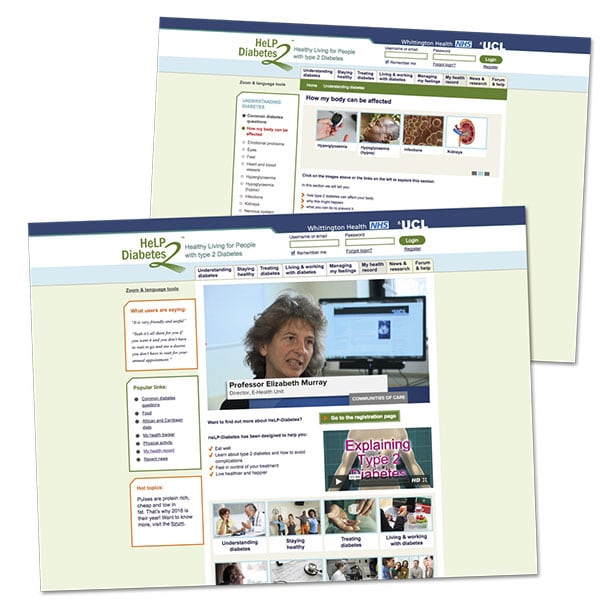
HeLP-Diabetes has around 800 users and is an evidence-based programme which takes a holistic view of self-management, focusing on medical, emotional and role management. The University College London project offers ongoing support for patients and carers. Features include behaviour change support (with goal setting, action plans, reminders and feedback); emotional support (computerised cognitive behavioural therapy tools, mindfulness, online moderated forum); an online health record where patients can input their own health related information and set text/email reminders for themselves; and regular newsletters, emails and SMS alerting users to updated content, new research findings, and directing them to specific (seasonally relevant) areas of the website. Benefits for patients include reduced diabetes-related distress, improved glycaemic control, accessibility, convenience, privacy and access to clinically informed and trusted information. Developed as a research programme, it is now being rolled out nationally and has been adopted in four London CCGs.
Results
The trial was successful, recruiting to target (n = 374) and achieving good follow-up. The analysis of primary outcomes showed a significant improvement in HbA1c amongst those randomised to HeLP-Diabetes ( mean difference -0.23%; 95% Confidence Interval -0.42 to -0.041; p=0.017) but no difference between groups for the PAID (p=0.25). Sub-group analysis suggested a beneficial impact on PAID in patients diagnosed within the last fi ve years. In the implementation study, 22 out of 34 practices adopted HeLP-Diabetes and signed up 205 patients. Of these, around half (47%) were from Black or other Minority Ethnic groups, one third left school at 16 with no further formal education and one-third described their computer skills as basic.
Challenge
Good self-management is key to improving health outcomes for people with diabetes. However, despite NICE recommending that everyone with type 2 diabetes should be offered structured education at diagnosis with annual reinforcement, and incentivisation of GPs to refer through QOF, take-up remains low with only 5.3% of eligible patients attending in 2014–15 (National Diabetes Audit). One reason for this may be that most of the current education offered by the NHS is delivered in a group setting, which is not convenient or suitable for some people.
Objectives
To develop, evaluate and implement a web-based self-management programme for people with type 2 diabetes (at any stage of their illness journey) with the goal of improving access to, and uptake of, structured education and self-management support, hence improving health outcomes in a cost-effective manner. To enable people with type 2 diabetes to take control of their health and lead happier, healthier lives.
Solution
The development of the intervention was informed by: literature reviews; theoretical frameworks; de novo research with patients and HCP to establish user needs and wants; a process of participatory design with patients and HCP; and commercial software and web designers. A pilot study in three practices demonstrated reduced diabetes-related distress (measured by the Problem Areas in Diabetes scale, PAID) after six weeks use. An individually randomised controlled trial was undertaken in primary care to determine effectiveness and cost-effectiveness. The joint primary outcomes were glycated haemoglobin (HbA1c) and PAID. The trial recruited to target and achieved follow up at 12 months (the primary outcome point) for 85% of HbA1c and 90% of PAID data. An implementation study was undertaken in 1 CCG to determine the best method of implementing HeLP-Diabetes into routine NHS care. The implementation plan was theoretically informed, iterative, and evaluated with mixed methods (quantitative data on uptake and use; qualitative data on benefits and challenges). This resulted in a programme that was highly acceptable to commissioners, HCPs and patients, as well as incorporating the latest evidence and best practice in promoting self-management of diabetes.
Learnings
The research programme is completed and it is now transitioning into a service delivery model. HCP facilitation appears to be an important factor in overcoming the digital divide. In practices which did not offer HCP facilitation but required patients to self-register, users were more likely to be highly educated and describe their computer skills as good or expert. The team has set up a not-for-profi t community-interest company (CIC) called HeLP Digital, which aims to disseminate HeLP-Diabetes across the UK. The CIC was one of seven successful ventures on the 2015 Health and Social innovators Programme (funded by the Government's Health and Social Innovation fund backed by the Cabinet Office) and to date, has contracts with four CCGs to make HeLP-Diabetes available to all patients with type 2 diabetes in their locality, thus improving availability and range of support for self-management. Usage data show that most visits occur outside normal working hours, confirming the convenience of online access.
Evaluation
The pilot showed that patients (n = 18) who used HeLP-Diabetes over six weeks showed signifi cant improvement (reduction) in their level of diabetes-related distress (PAID). There was also a non-significant trend toward improvement in self-efficacy for diabetes management, as measured on the Diabetes Management Self-Efficacy Score. Data from qualitative interviews suggested that users felt better informed and more aware of how to manage their diabetes, reporting improved self-efficacy and confidence.