Summary
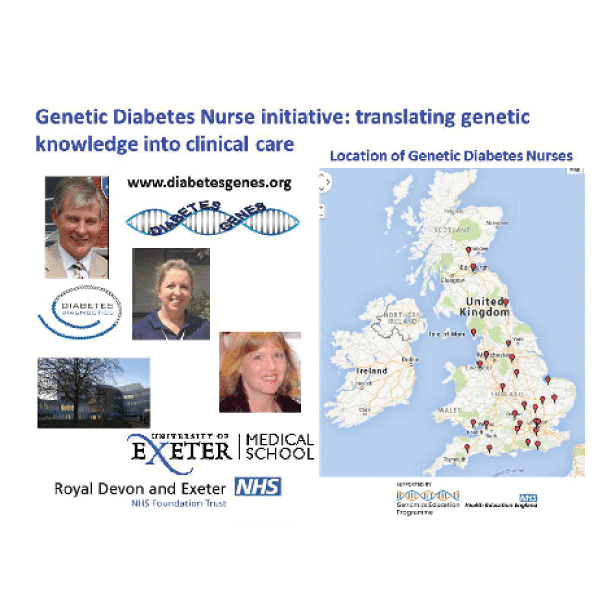
Monogenic diabetes accounts for around 2% of diabetes (an estimated 40,000 NHS patients) – but 80% of cases are misdiagnosed as having Type 1 or Type 2 diabetes. This means they receive the wrong treatment. The team developed the national Genetic Diabetes Nurse (GDN) educational initiative to train healthcare professionals to recognise monogenic diabetes and to support them in managing patients with a confirmed molecular genetic diagnosis. This initiative trains Diabetes Specialist Nurses across the UK to disseminate new genetics knowledge and improve diabetes care within their region, using a model of ‘training the trainers’. Running since 2002, the model was recognised as an exemplar in the DH White Paper ‘Our inheritance, our future’ for building genetics into mainstream services.
Results
A total of 48 GDNs have been trained since the project started in 2002, and there are currently 28 GDNs in post in the UK covering over 75% of the UK. GDNs have increased knowledge and recognition of monogenic diabetes across the UK by giving around 600 presentations to 7,700 healthcare professionals across the UK. These educational sessions were highly evaluated with 99% of the presentations rated by attendees as very good or excellent for both educational value and quality. There has been an increase in annual referral rates for genetic testing (from 111 in 2001 to 823 in 2014) and the number of UK patients with a confirmed diagnosis of monogenic diabetes has increased (from 483 in 2001 to 3,370 in 2014).
Challenge
Monogenic diabetes accounts for around 2% of diabetes, which is an estimated 40,000 NHS patients. About 80% are misdiagnosed as having Type 1 or 2 diabetes and therefore receive the wrong treatment. A genetic diagnosis is important as it determines optimal treatment – but the majority of health care professionals have little training in genetics or genomic medicine. This means a mechanism for increasing recognition of monogenic diabetes is clearly needed to avoid misdiagnosis and inappropriate treatment.
Objectives
To raise awareness of monogenic diabetes across the UK amongst health care professionals involved in diabetes care leading to improved recognition and treatment of these patients.
Solution
Experienced Diabetes Specialist Nurses from across the UK were seconded to the GDN project for 3.5 hours each week, with funding obtained to cover their salary and travel costs to attend training courses provided by the team of doctors, scientists, genetic counsellors and nurses in Exeter. This comprised a foundation programme (two days) on genetics and monogenic diabetes which provides core level competencies and development programmes (1.5 days every four months) which reinforce and build on core concepts. The training is structured to include key lectures, workshops and group discussion of patient cases. The key element of this training is the ongoing nature which enables us to update the GDNs with new genetic knowledge, develop the skills/roles of the GDNs and monitor their performance. GDNs have a key role in providing training in monogenic diabetes to health care professionals working in both primary and secondary care across their regions. This guarantees training in genomics as opposed to ‘assumed’ knowledge with a lack of targeted training. This in turn aids the recognition of patients with monogenic diabetes and ensures appropriate access to genetic testing. The GDNs then liaise with the local healthcare professionals involved with the patient when a genetic cause of diabetes is confirmed and ensure the patients receive the optimal information, treatment and family members are also offered genetic testing.
Learnings
This initiative highlights the key role that Diabetes Specialist Nurses can play in the training of other healthcare professionals involved in diabetes. The model of training GDNs is cost-effective – however, identifying ongoing funding for a project which involves nurses working across regions has been difficult. There are key characteristics of monogenic diabetes which can be shared amongst health care professionals involved in diabetes care and these characteristics (along with increased awareness of www.diabetesgenes.org ) can increase access to genetic testing. Patients who are diagnosed with diabetes less than six months of age should be referred to Exeter for genetic testing for neonatal diabetes. Individuals meeting the following criteria should also be considered for genetic testing or discussed with the Exeter team or local GDN: patients diagnosed with diabetes less than 25 years of age with an affected parent or child who are non insulin dependent or have evidence of endogenous insulin production more than three years post diagnosis.
Evaluation
A genetic diagnosis has been confirmed in 710 patients referred by GDNs ensuring these patients (and their relatives) receive optimal treatment, and 387 patients have been able to stop insulin treatment as a result of getting the correct genetic diagnosis.