Summary
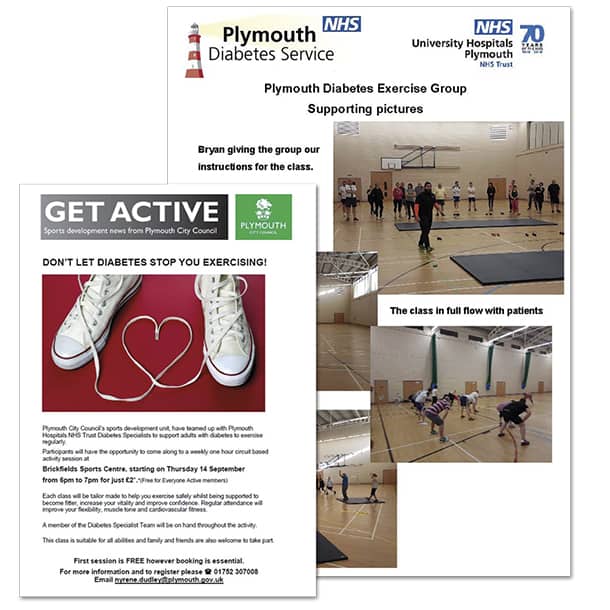
The Diabetes Team identified a gap in the care provided for patients in terms of exercise provision. The benefits of exercise are well-documented and the team wanted to offer support with exercise as part of routine care. In September 2017, in collaboration with the Sports Development Team (SDT) at Plymouth City Council (PCC), a low-cost, weekly circuits group for people with diabetes with diabetes specialist nurse (DSN) support was established. Initially the class was a six-week pilot, but high attendance, with an average of 17 people each week, meant this was extended to six months. Attendance has varied between 24 and 13 people. The funding from SDT has since been extended again until December 2018. The project is being evaluated with the aim of expanding it to offer further exercise classes and support with exercise to all patients. Response from service users has been positive, with participants reporting anecdotally increased fitness, weight loss, medication reductions (both diabetes and blood pressure medication), increased activity levels and overall health.
Innovation
Most people reviewed in clinics were not meeting the current recommendations of 150 minutes of moderate physical activity per week. The team wanted to help promote self-care in their patients and approached the SDT about setting up a class for people with diabetes. They offered a weekly circuits class, allowing patients to bring a friend or family member. The first session was free, and £2 thereafter. In addition to the personal trainer and venue provided by the SDT, one or two diabetes specialist nurses (DSNs) were present to advise on exercise, treat hypoglycaemia and give advice on diabetes management. The DSNs attended in their own time for the first six-month pilot. The plan is to offer classes with paid DSNs and secure funding for a service review. Patients in clinic had reported that they felt their diabetes held them back from exercising so a new initiative was required locally. An initial search for similar schemes, where people had specialist diabetes support when exercising, was undertaken. There was only one, in Scotland, where they had run classes in five locations, with three of the classes having a maximum attendance of five, one class averaging seven or eight and the other 11 or 12. As there were no NHS funds available for the new group, it was set up with PCC’s SDT, which had funding to support weekly exercise groups but had found it difficult to engage the local population.
Results
One of the challenges is gathering data because there is insufficient space to take participants to gather information privately. Currently, questionnaires are given to attendees, who are asked to return the completed forms the following week. While two questionnaires may seem lengthy for attendees, the team felt it was important to use validated tools to evaluate the project. From the limited data gathered, the Hba1c of the 12 data sets showed: nine patients had a fall in Hba1c of 2-36mmols, average of 12.5mmols fall; two patients had an increase in Hba1c +1mmols and +4mmols; one patient did not have bloods repeated, and one patient with ‘prediabetes’ HBA1c remained the same and did not develop diabetes. Regarding the patients’ weights, six reported weight losses of 0.5kg-5kg, average 3.3kg, while three had weight increases of 1.5kg-4.5kg. Overall, the IPAQ activity score improved for the patients who returned the form. However, the DDS17 score did not see an improvement. There was a very limited return of forms from the group. Patients reported that they had increased energy/fitness, motivation to increase activity throughout the week, improvements in diabetes control, two reported a reduction in hypertension medication, and reductions in waist circumference or clothes size. One benefit has been a participant who required insulin, was needle phobic and struggled with blood glucose testing, who came to the exercise group, built trust with the professionals and is now blood glucose testing and taking insulin regularly. Patients have been advised on dose titration before or after the class, avoiding the need for a clinic visit.
Dissemination and Sustainability
The project has SDT funding until the end of 2018. The Diabetes Team is working to secure additional funding through organisations such as the Novo Nordisk Foundation. The local Diabetes UK group is funding the purchase of additional equipment. The long-term vision is to expand the number of classes offered and use multiple locations across the locality to aid accessibility. However, the Diabetes Team would need time allocated in the job plan to attend and support the groups. The Diabetes Team is in discussion with the Diabetes Commissioner to see if the project could be commissioned. Another idea is to provide clinical advice/education sessions pre- or post-exercise, which could mitigate the need for patients to attend primary or secondary care providers.
Method
At the initial meeting between the DSNs and SDT, it was agreed that a ‘circuits’ format would appeal to the broadest range of individuals. SDT would find a central location and a personal trainer with experience and awareness of the challenges people with diabetes might face. Initially, the class was advertised to users of the Diabetes Centre and local GP surgeries through word of mouth. Some patients were personally invited by the DSN Team. Flyers were provided to GPs and practice nurses to invite their patients, plus displayed at the venue. In addition, the flyers were sent to the educators of New Type 2 diabetes education. In September 2017, a six-week trial of the exercise class began, with attendance of 10-15 participants. This positive start enabled SDT funding to continue until March 2018, and subsequently to December 2018. On the first week of attendance participants were requested to complete a data collection form, IPAQ and DDS17 questionnaires, as well as an SDT health declaration form. The same data was collected at six months and will be provided again at 12 months.