Summary
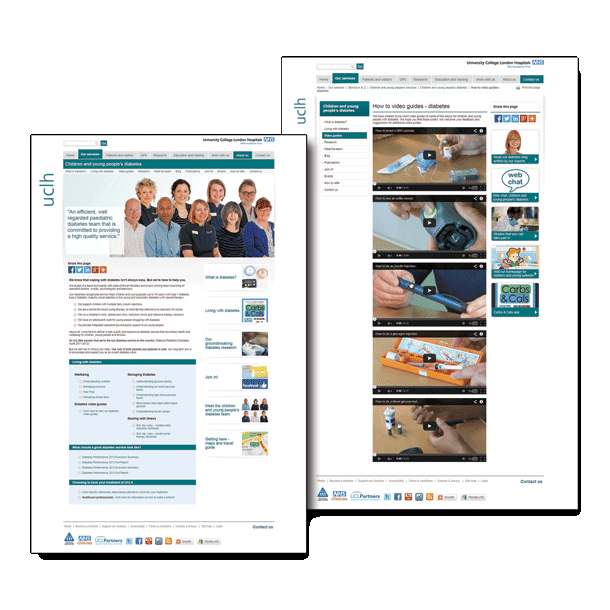
The aim of this project was to bypass the overwhelming wealth of diabetes information on the internet and create a central ‘hub’ of online expert information and advice to support young people with diabetes. The team built a website based on feedback from parents and carers of young patients to determine what was missing from existing sources. The site has information on living with diabetes, managing diabetes and dealing with illness. Feedback from parents and carers of children and young people has been overwhelmingly positive.
Challenge
There’s an abundance of information about diabetes available on the internet. After talking to parents and carers of young people with diabetes the team ascertained that there was no ‘one stop’ source of information meeting the needs of this particular patient group. Parents and carers were visiting US websites such as JOSLIN as well as UK-based ones like NHS Choices and JDRF where they could find information, but had to ‘join the dots’ themselves. We did not seek to replicate the information already available, but to share the expertise within the award-winning paediatric diabetic team at University College London Hospital (UCLH) and to include the ‘best of the rest’ through syndicated copy (NHS Choices) and links to other useful organisations.
Objectives
The objectives were to identify the following: what sort of information is currently available; where parents and carers of children with diabetes currently go to find out more information; and what was ‘missing’.
The team also wanted to create online content that meets the needs of parents and carers of children with diabetes, test the proposed concept with a group of expert parents and carers, and develop a ‘dynamic’ element to the website to encourage new and repeat visitors.
Solution
The project had a number of stages. The team carried out desk research to find out who else is providing online information about diabetes, then put together a strategy that outlined potential elements for the website. They then tested the proposed content on a group of expert parents/ carers, amending it according to feedback. The content was tested through a Facebook community group.
After this testing period the website was launched. The team posts regular updates via the ‘join in’ pages – blog updates, an online web chat, and so on – to encourage repeat visitors to the site.
Learnings
The key lesson learnt was to have ‘buy in’ from at least one key person in the clinical team.
The project was co-ordinated by the communications team at UCLH, supported by an external agency. The development team worked very closely with the clinical team, particularly a nurse consultant who could liaise with both patients and the rest of the clinical team. Her contribution to the process was invaluable.
The web project was an item on the agenda at a board of directors meeting, which meant there was no room for negotiation, and that it had to be delivered to ensure continued board support and buy in. This deadline kept the project moving at a rapid pace.
Evaluation
Apart from web traffic and feedback it is difficult to measure the impact of the website. However, the paediatric diabetes team reports an increase in the number of referrals to the service since the launch. They are also referring parents and carers to the website, particularly the video guides. This gives them the expert advice they need, while allowing the team to use their clinical time more effectively.
Other services could replicate this model – but it’s important to focus on the ‘right’ area. There is little benefit in creating something too general.
The most important aspect is talking to people who will use the website – the site should be what parents and carers want, not what we think they want.