Summary
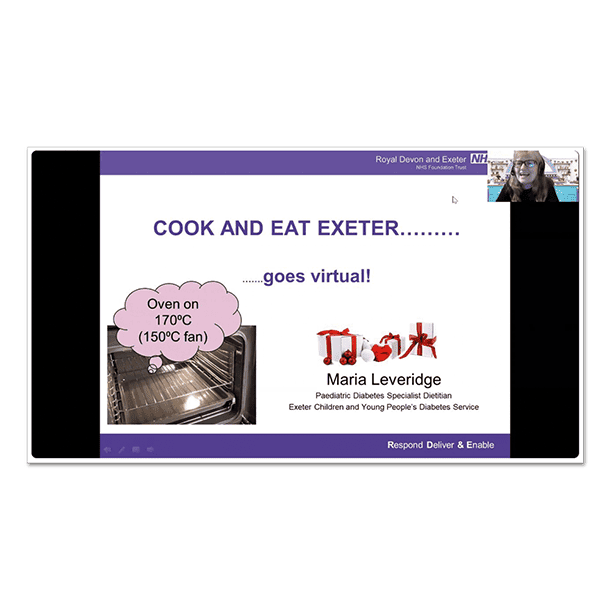
Cook and Eat is an established level 3 carbohydrate education programme for children and young people (CYP) at Exeter Children and Young Person’s Diabetes Service. It changed from an annual face-to-face session (for under-16s) to virtual sessions (offered to all) during COVID-19. The CYP cook a recipe at home with a parent or carer. Each recipe is designed to be easy to follow and uses inexpensive and accessible ingredients. The carbohydrate counting process is explained and the CYP are encouraged to do it independently. The main aim is to create a fun, engaging and collaborative environment for supporting carbohydrate counting.
Innovation
Face-to-face Cook and Eat carbohydrate education sessions had been offered once a year in secondary schools. Virtual sessions using Zoom commenced in October 2020 and took place four times. The sessions involved CYP cooking a recipe at home with a parent or carer then carbohydrate counting the recipe with the facilitator. Sessions aimed to be fun, engaging and collaborative. Secondary aims included continuing relationships with healthcare staff, including siblings and other family members, in carbohydrate counting, and education on other aspects of health and nutrition. CYP were recruited via DigiBete app news, email invitation and posters on parent/carer support group Facebook pages. Sessions lasted 45-60 minutes, and were held during school holidays; session times and days varied to increase attendance. Previously, face-to-face sessions were offered to CYP up to year 11, but all CYP within the service were invited to the virtual sessions. After the initial pilot, Zoom Pro was identified as the most suitable platform. Sessions started with an introduction, ‘show me, tell me’ game and session ground rules. The CYP then worked through the recipe and the carbohydrate estimation process. Then CYP were helped with carbohydrate counting.
Results
Twenty-five CYP attended between October 2020 and April 2021, representing 18.5% of the 135 caseload (under 16 years of age) of ExCYPDS. They attended a total of 54 sessions; 60% attended more than once.
Virtual sessions were attended by those who had previously been to face-to-face Cook and Eat sessions and those who had not. Seventeen of the CYP had attended a face-to-face session before the pandemic. CYP of a wide age range (4-15 years) and of diabetes duration (0 months-10 years and 10 months) consistently attended across all group sessions. A small number of CYP attended one-to-one sessions. Seven CYP attended nine sessions: four girls and four boys, three of whom were primary school age. Fewer families attended online sessions than attended face to face annually. Of the under-16 caseload 46-51 (38-42%) attended previous face-to-face sessions, while 18.5% attended virtual sessions. Potential reasons include technological disadvantages, technology fatigue, changes to family commitments or routines, psychological stress and social disadvantages. Importantly, the sessions allowed continued contact with the healthcare team outside the clinic, let siblings join in and let families see others living with diabetes. The sessions were free to attend. The cost per head for Cook and Eat in person is approximately £500 per year (excluding staff costs). In contrast, Zoom Pro is under £180 per year and more education can be offered (up to six sessions rather than one).
User Feedback
Participants were asked to feed back on food taste, session acceptability and to share photographs of their culinary creations with the facilitator by email after each session. Some participants shared their feedback via Twitter. Participants enjoyed the sessions, which may help strengthen relationships with healthcare professionals outside of clinic appointments, contributing to improved overall care. In future planning, some families may prefer face-to-face sessions, and the potential additional benefit of peer interactions.
Different professionals observed the sessions and gave feedback, which allowed further refinement. The sessions also provided opportunities to enhance inter-disciplinary working.
Dissemination and Sustainability
The virtual sessions enabled greater remote observation by professionals in other services and the sharing of resources. The pilot sessions were remotely observed by dietitians from UCLH, Gloucester, Swansea, and Taunton. The resources were shared with the South West Dietitians and beyond. Paediatric Diabetes services at Bath, Gloucester, Taunton, Torbay, Swindon and UCLH have also run similar virtual education sessions. An article reflecting on session development and attendance has been submitted to an academic journal. Inter-service collaboration and sharing helps both project sustainability and continued innovation; additionally, it decreases overall costs to the NHS. DigiBete will host the Cook and Eat resources for families and other professionals to have their own sessions in 2021. Face-to-face Cook and Eat sessions had a wider reach than virtual sessions, but virtual sessions and the video platform used means that the virtual sessions were more cost effective. Further feedback from families is paramount when considering longer-term service provision and promoting inclusivity.