Summary
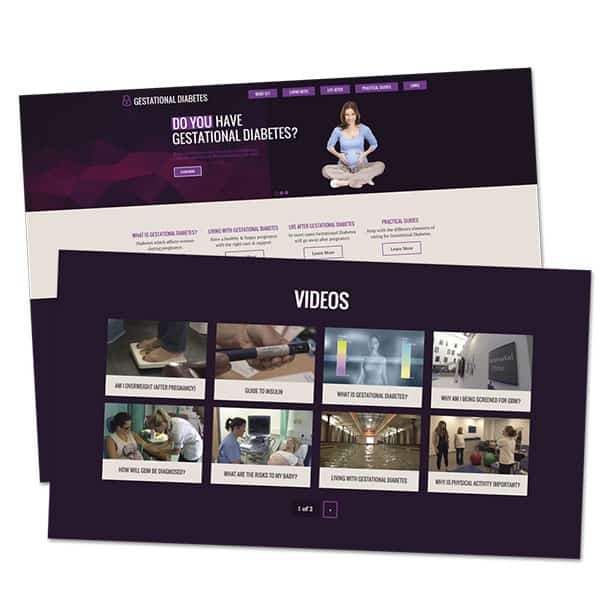
GDM is associated with increased perinatal morbidity and a 7-fold risk of developing type 2 diabetes in later life compared with normoglycaemic pregnancies. Approximately 5% of UK pregnancies are diagnosed with GDM. Funded by the International Diabetes Federation the aim of Queen's University Belfast's resource 'GDM: Things you need to know, but maybe don't!' is to improve the patient experience of every woman diagnosed with GDM during their pregnancy. Originally produced as a DVD in four languages (English, Urdu, Arabic and Somali) and later converted to a website (www. womenwithgestationaldiabetes.com), it was evaluated in a multi-centre randomised controlled trial among 150 multi-ethnic women with newly diagnosed GDM in three UK hospitals. It is now used routinely in patient education and, via the use of social media, usage of the website is growing from patients globally.
Results
The DVD was evaluated in a multicentre randomised controlled trial (RCT) in Northern Ireland and Manchester, 2 distinct populations with regard to ethnic mix. 150 women with GDM were recruited and randomised to receive the DVD in addition to standard care or standard care alone. Impact of the DVD on maternal anxiety and stress and blood glucose control were assessed. The aim of the RCT was to evaluate the impact of an innovative patient-centred educational DVD on anxiety and glycaemic control in newly diagnosed women with GDM. They were asked to complete a series of validated questionnaires on maternal anxiety and stress and were followed up at their next scheduled clinic visit and asked to repeat the same questionnaires. In addition, self-monitored capillary blood glucose on day prior to clinic visit was documented and those in the DVD group were asked to complete a feedback questionnaire. Primary outcomes were mean one-hour postprandial blood glucose and state anxiety. Unfortunately, no significant difference was reported between the DVD group and standard care for anxiety or mean 1-hour postprandial self-reported capillary blood glucose at visit 2. However, patient feedback on the resource produced positive results. Using a scale of 0-10, 84% rated the DVD 7 or above for usefulness (10 being very useful), and 88% rated it 7 or above when asked if they would recommend to a friend (10 being very strongly recommend). To maximise impact, the DVD was converted to a website - www.womenwithgestationaldiabetes.com - which went live at the end of January 2016.
Challenge
GDM is associated with increased perinatal morbidity and a seven-fold risk of developing type 2 diabetes in later life compared with normoglycaemic pregnancies. Approximately 5% of UK pregnancies are diagnosed with GDM. There is a dearth of patient-friendly support material on this serious condition.
Objectives
To design, develop, pilot and evaluate an effective educational tool for improving the patient experience of every woman diagnosed with GDM, leading to a sense of empowerment and allowing woman to regain control of their lives. To educate women to make changes to their diet and lifestyle to prevent type 2 diabetes.
Solution
DVD design and development centred on two key stakeholders ('DVD user group' and 'professional advisory group') working alongside a professional multimedia company. Five design focus groups were conducted in multiethnic women in Manchester and Belfast. Data from these was then used to steer the DVD design. The DVD user group also provided feedback on preferred DVD style, informing modifications and improvements during the development and pilot stages. The resource, a DVD or website, features five women with GDM from different ethnic backgrounds sharing their views and experiences throughout pregnancy. These interviews are accompanied with an evidence-based commentary and user-friendly graphics to assist in the understanding of the condition.
Learnings
Although patient anxiety or self-reported glycaemic control (primary outcomes) remained unchanged between those women randomised to receive the DVD and the control group, feedback indicated that the DVD still had a beneficial impact on this patient group. Indeed many healthcare professionals informed the team on many occasions that this resource was an excellent and much needed educational tool in busy clinics. Subsequently, additional DVDs were allocated to all three trial centres after the trial for use as patient education tools. Meanwhile website traffic is monitored on a monthly basis.
Evaluation
Although the team did not see a difference in patient anxiety or self-reported glycaemic control between women randomised to receive the DVD and the control group, the DVD had a beneficial impact on this patient group. This qualitative data proves that the resource is an informative and user-friendly tool for educating women, and their families about GDM and its management. While the website is in English, foreign language videos (Urdu, Somali and Arabic) can be accessed from the website. This resource, designed by women with GDM for women with GDM, could easily be utilised by other clinics and healthcare professional, both in primary and secondary care throughout the UK, and beyond.