Summary
Established just over 20 years ago, the Adult Epidermolysis Bullosa (EB) Service at Guy’s and St Thomas’ Hospital (GST) provides comprehensive multidisciplinary care for around 500 individuals. The team comprises core disciplines (specialist nursing, dermatology, dietetics, plastics, anaesthetics, hand and physiotherapy, psychotherapy, dentistry and ophthalmology) alongside other professionals throughout the Trust to deliver patients’ holistic healthcare needs in a comprehensive and focused way. Based in the Rare Diseases Centre (RDC) at GST, the team has developed innovative ways to provide the right kind of care in a streamlined way to optimise every patient encounter.
Method
EB can affect many different aspects of life and health; often the skin is only a small part of the condition as it can affect almost any system in the body, as well as mental wellbeing. This means the multidisciplinary team (MDT) must be diverse. Weekly virtual ward rounds discuss the clinical issues arising over the preceding week, streamlining contacts that usually come via the six EB clinical nurse specialists (CNSs). Various EB outpatient clinics are held in the RDC, including conventional dermatologist- and CNS-led appointments for patients with milder EB (including telephone appointments, as patients are spread across the UK), all- or half-day MDT clinics with the wider team, EB podiatry clinics and dedicated infusion clinics for intravenous iron. Elective and emergency inpatient admissions are also available for this cohort.
Results
In addition to providing the right clinical experience for patients, they are supported when attending procedures. For example, an EB CNS is present in interventional radiology when a patient has an oesophageal dilatation (over 40 per annum), or when having hand release or cancer surgery under plastics. This ensures that patients feel supported and have an advocate who will protect them from unintentional damage from handling while under anaesthetic. The CNS team makes home visits to patients with severe cases, attends transition clinics for young people coming from the Great Ormond Street (GOS) paediatric EB service, and liaises with local teams and services where necessary. The EB MDT provides a circle of care around vulnerable patients to ensure they are physically and emotionally supported throughout. The EB service caters for individuals with different healthcare requirements, which requires efficient co-ordination to ensure that they are seen by the correct professionals as and when needed, both electively and urgently. Clinic attendances are also an opportunity to participate in research or take blood or tissue samples for research into disease mechanisms or EB cancer. The home visits enable full skin examination in a more comfortable and less time-pressured environment than in clinic. The team also runs an annual outreach clinic in Exeter for patients living in the South West, saving them travel costs and the potential discomfort of making a trip to London.
Sustainability and Spread
An annual, two-day EB course is run for professionals with the GOS paediatric EB service, attended by many international delegates. Globally, the Adult EB Service is recognised as a pre-eminent EB centre and receives many international requests for clinical advice. The MDT has published widely on EB in peer-reviewed journals, including leading on, or contributing to, best clinical practice guidelines. Team members have also lectured nationally and internationally on the model of care and EB management and diagnostics. There are close ties with King’s College London regarding a broad portfolio of basic science and clinical EB research. Hands-on training has also been provided to health professionals from around the world.
Dermatology Team of the Year
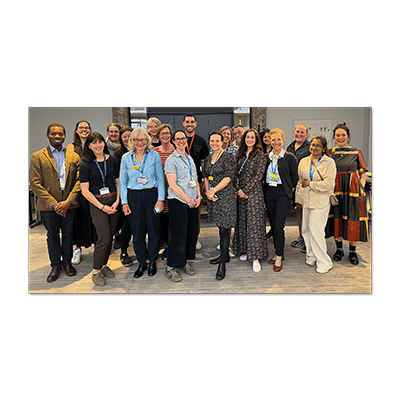
Adult Epidermolysis Bullosa Team
by St John’s Institute of Dermatology, Guy’s and St Thomas’ NHS Foundation Trust