Summary
Emergency Departments (EDs) across the country are experiencing unprecedented pressure with record-breaking waiting times. Crowded EDs pose a threat to safe diabetes management and people living with diabetes (PLwD) are vulnerable in the department. Manchester Royal Infirmary (MRI) has seen a rise in avoidable diabetes harms associated with ED crowding, damaging inter-speciality partnerships and reputation. ‘Operation DiaMED – Diabetes Matters in ED’ provides a collaborative, cross-speciality solution, focused on shared learning from patient safety incidents, to improve diabetes management at the front door.
Innovation
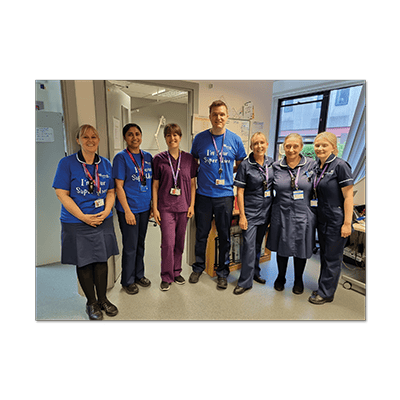
MRI’s ED is one of the largest in the country, experiencing increasing patient demand and high bed occupancy. Incident reporting (Ulysses) analysis (December 2022-April 2023) highlighted 32 ED diabetes-related incidents, including issues with management of Diabetic Ketoacidosis (DKA) and Hyperosmolar Hyperglycaemic State (HHS), insulin prescribing, plus problems with Variable Rate Intravenous Insulin Infusion (VRIII). A collaborative, interprofessional, cross-speciality group – Operation DiaMED – was created, including members of the nursing, medical and pharmacy teams in diabetes and emergency medicine. It addressed operational and educational issues, including the lack of mandatory, bespoke insulin safety education for ED staff involved in diabetes management. Operation DiaMED is a data-driven, incident-focused initiative aligned to the Patient Safety Incident Response Framework (PSIRF) methodology. Objectives included: reducing diabetes-related harms and improving management of diabetes emergencies in the ED; developing and delivering a cost-effective mandatory educational programme from insight of incidents; evidence improvement in outcomes by incident reporting re-analysis and feedback from users; building a positive reporting culture to highlight areas for continuous improvement and promote self-reflection; investing in partnerships between the diabetes and ED teams, as well as identifying and sharing best practice. The strategy featured two cycles of mandatory education for ED nurses and prescribers. From May to June 2023 incident analysis was conducted to raise awareness and ensure rapid turnaround of shared learning. From October to November 2023 protected time was allocated to consolidate knowledge. The education programme featured drop-in and half-day inclusive sessions designed to accommodate different roles and learning styles. Topics included the basics of insulin therapy, hypoglycaemia, hyperglycaemic emergencies (DKA, HHS, VRIII), safe prescribing and incident-based case studies. In-reach diabetes support provided a proactive inpatient diabetes service with twice-daily visits to the ED to identify and triage admissions.
Equality, Diversity and Variation
MRI has a culturally and ethnically diverse workforce serving a population with a high prevalence of diabetes alongside high levels of socioeconomic deprivation. Operation DiaMED aimed to create a safer care system by reducing variation in clinical care and supporting staff to achieve the same knowledge levels. Resources were user-focused and delivered in an inclusive and adaptable way. The nursing sessions were designed around real-world incident scenarios with a maximum of 10 staff per session. Staff had space for reflection and learning at different paces. A third of the trained ED nursing workforce was from ethnic minorities and the sessions were planned for all grades and expertise. Prescribers’ sessions were delivered in a drop-in format, hosted every 30 minutes during lunchtime and focused on case-based discussions. Attendees were from diverse ethnic groups and included different grades of doctors in training, consultants, non-medical prescribers and pharmacists. The sessions were planned in repeated cycles to support inclusivity and enable engagement. The patient experience questionnaire contained four simple questions delivered by the inpatient diabetes team, including Urdu, Hindi, and Portuguese-speaking staff who could deliver the information in different languages.
Results
Operation DiaMED provided high-level education and a positive reporting culture, fostering interdisciplinary collaboration and knowledge-sharing through engagement and improvement work with increased diabetes team visibility and reputation. There was over 50% reduction in core recurring issues. The incident-focused educational programme was carried out successfully. May and June 2023 were acknowledged as diabetes months in ED with local initiatives for nursing staff led by practice-based educators, such as a diabetes board display and dissemination of information through nursing handovers and safety huddles. Overall, 54 registered nurses took part. For prescribers, nine targeted, case-based drop-in sessions were delivered by the diabetes team, supported by the ED consultant quality and safety lead and ED pharmacist. Incident scenarios were discussed by 51 prescribers from all grades. In the second phase, nursing staff had nine diabetes study mornings delivered by the diabetes team, targeting gaps in knowledge identified by incident reporting. The full ED nursing workforce attended (65 nurses). Prescribers had three mandatory, case-based drop-in sessions supported by an ED consultant with an interest in medical education (37 prescribers). Pre- and post-teaching questionnaires were completed by nursing staff and showed areas with the greatest improvement were in managing VRIII, ketones, DKA and subcutaneous insulin.
User Feedback
Up to 83% of 64 staff evaluated each topic with the maximum score of 5 (very good). The highest scores were achieved on ‘basics of insulin therapy’, ‘hypoglycaemia’ and ‘hyperglycaemic emergencies’. Qualitative and more specific feedback resulted in changes, such as having discussion of case-scenarios throughout each presentation and sharing presentations with staff. An anonymised patient experience survey was delivered to inpatients and outpatients admitted to the ED during May 2024. Nine forms were collected and gave an average score of 4 (maximum 5), reflecting overall patient satisfaction. Almost 90% of respondents felt that ED staff met their needs. Two felt that staff had little awareness about their diabetes diagnosis and this feedback was used to promote continuous education.
Dissemination and Sustainability
Operation DiaMED was piloted at one site but it could be adapted to other sites and Trusts. The PSIRF was used as a guide to provide insight and develop a safety action plan, engaging staff through a learning response. The education was also aligned with JBDS and provided scope to implement the GIRFT interactive pathways. The senior leadership team made diabetes a safety priority and staff were supported to attend sessions. The programme was also delivered at every ED Doctors’ and Nurses’ induction and ACP forums. An annual refresher is planned and a diabetes link nurse programme is under discussion. The team was invited to share the learning at a Medicines Safety Committee meeting.