Summary
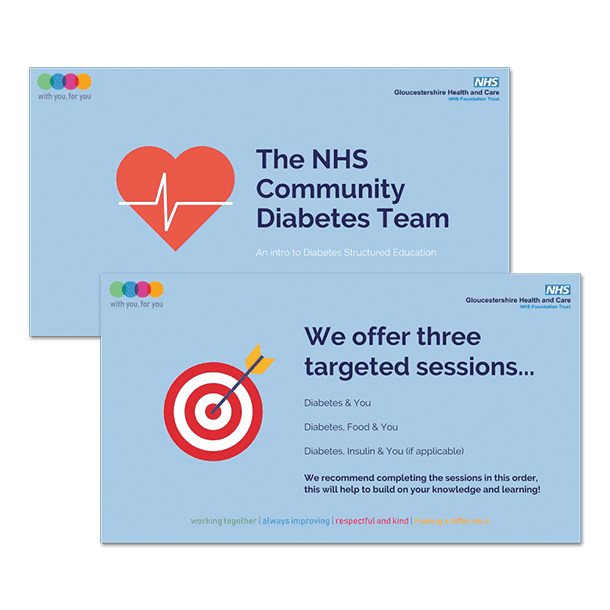
The Diabetes Education Service was suspended in March 2020 to support the COVID-19 response, so the team proactively created a new online programme, using MS Teams, to provide diabetes education. The six-part, online course runs across multiple days/times of the week, including morning, afternoon and evening, to ensure flexibility for users. It covers diabetes management, the importance of looking after mental health and wellbeing, understanding goal setting to encourage motivation in challenging times and the importance of staying physically active during lockdown. The information provided accounts for psychological, physical and learning difficulties, cultural differences and other long-term health conditions.
Innovation
The Diabetes team identified a need for continued specialist support during COVID-19, as reduced contact with healthcare professionals was likely to increase anxiety, isolation and confusion for those managing diabetes. A lot of misinformation was being shared via social media, online communities/forums and non-accredited websites, advocating for low-intake diets, unsuitable lifestyles changes and alternatives to medication. The immediate challenge was sourcing a method of contact which could meet the needs of multiple service users at a time, whilst being efficient and accessible to a wide and diverse audience. The answer was safe and secure online group support via MS Teams. An online course was created, guided by a Microsoft presentation that covered all necessary bases for someone managing diabetes. It also allowed questions, comments or concerns about health to be addressed with positivity and accuracy by a specialist. All content was created to be widely shared with those who successfully completed the course, to continue to support their learning beyond the online programme. Resources included a 36-page patient booklet, PDF copy of the presentation, easy-read materials for users with learning difficulties, and signposting materials for additional services. Social media was used to continue engaging with individuals and share relevant, up-to-date and accurate information.
Results
Since the programme started in October 2020, the diabetes education team has received 738 new referrals. A total of 437 (59%) users have completed the online course, 46 service users declined the offer (6%) and 255 were recorded as ‘did not attend’(DNA) (35%). A ‘how-to’ guide about how to log in to the platform and use its basic functions was developed to help with technical reasons for non attendance. SMS reminders were also sent 24-48 hours before session booking, reducing DNA rates. Service users were asked to provide at least 24 hours’ notice if unable to attend. Comparing the costs of face-to-face structured education (including transport, room hire, diabetes educator pay) with the online training, the total saving with the online education was £418.26 per week.
User Feedback
The NHS Friends and Family Test (FFT) is used to collect feedback. It collects demographic and experiential information. The monthly report is reviewed by the Diabetes Team. The service has been rated 95% ‘Very good’ or ‘Good’ every month, but comments left by service users provide invaluable insight and inform the need for any suitable changes or modifications to the programme based on the patient experience and requirements. There has been much interest and support from stakeholders and colleagues within and outside the Trust. Medical professionals have asked to view the training to better understand what is being offered to patients with diabetes in Gloucestershire. Interested stakeholders and HCPs have offered positive feedback, including colleagues from NHS Cornwall.
Dissemination and Sustainability
This was a county-wide community project targeting anyone managing type 2 diabetes, or those caring for or supporting someone with the condition. Creating an online programme has overcome multiple barriers experienced by harder-to-reach cohorts, such as individuals with working commitments, childcare/carer responsibilities, or mental health issues. By reducing the need to take time away from work, reducing travel requirements to attend sessions and supporting those struggling with anxiety or stress, the online sessions have been a huge step in the right direction, not just for diabetes support, but for healthcare interventions overall. Reducing business and personal costs of attending in-person group sessions means an online course is less inconvenient and more likely to be welcomed. This project will continue post pandemic as it has proved invaluable to maintain supportive relationships with service users. Offering a choice of face-to-face sessions or online courses will achieve the greatest engagement. The training will be migrating onto a Moodle platform to host future courses and offer more e-learning materials. This initiative could be replicated by other services.